Plaza story
Digital chips vs analog chips
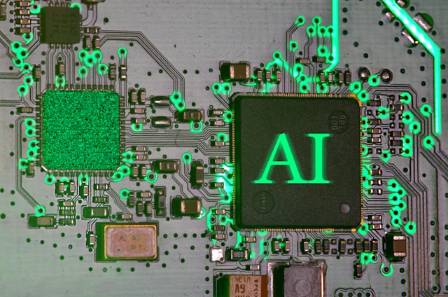
In semiconductor technology, digital chips and analog chips are often discussed together because they serve very different purposes, and the distinction between them is quite clear. Below is an explanation of how digital chips differ from analog chips.
Ethan Brooks
City note
Sunny tip
The full plaza write-up continues below on the positive pulse board.
Board
NYC Good News
In semiconductor technology, digital chips and analog chips are often discussed together because they serve very different purposes, and the distinction between them is quite clear. Below is an explanation of how digital chips differ from analog chips.
What Is a Digital Chip?
A digital integrated circuit, commonly called a digital chip, is a system built by integrating logic components and connections onto a single semiconductor substrate. It operates based on digital logic principles, mainly Boolean algebra, and is used to process discrete digital signals.
Digital Chips
Based on the number of logic elements, digital integrated circuits can be classified into several levels:
Small-scale integration (SSI)
Medium-scale integration (MSI)
Large-scale integration (LSI)
Very large-scale integration (VLSI)
Ultra-large-scale integration (ULSI)
From a functional perspective, digital circuits are generally divided into combinational logic and sequential logic. From a structural standpoint, they are often categorized into TTL and MOS families. Digital chips include a wide variety of devices such as logic gates, flip-flops, counters, encoders/decoders, memory units, and more.
Common Types of Digital Chips
Memory chips: such as EEPROM and FLASH
Microprocessors: such as x86, ARM, and MIPS architectures
Digital signal processors (DSPs): including image processing chips
Logic chips: such as TTL and CMOS circuits
Data converters: such as ADC and DAC
Control chips: including timers and PWM controllers
What Is an Analog Chip?
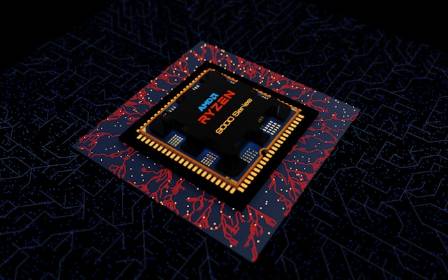
Analog integrated circuits are built using components such as resistors, capacitors, and transistors integrated on a chip to handle continuous analog signals. These chips are widely used in systems requiring signal amplification, conversion, or conditioning.
Typical analog circuits include operational amplifiers, analog multipliers, phase-locked loops, and power management circuits. Core functional blocks often include amplifiers, filters, feedback networks, reference voltage circuits, and switched-capacitor systems.
Analog Chips
Analog chips are mainly divided into:
Power management chips
Signal chain chips
Power management chips handle the generation, conversion, distribution, and monitoring of electrical energy within electronic systems. Signal chain chips manage the flow of signals from input to output, including collection, amplification, processing, and transmission.
Common Types of Analog Chips
Amplifier chips: used to increase signal strength
Filter chips: used to select or remove frequency ranges (low-pass, high-pass, band-pass)
Converter chips: used to transform signal characteristics such as amplitude, phase, or frequency
Power management chips: used for charging, regulation, and protection of power systems
Sensor interface chips: used for processing sensor outputs including amplification and filtering
Digital Chips vs Analog Chips
There are several fundamental differences between digital and analog chips, especially in structure and signal processing methods.
Digital chips are typically built using CMOS technology and consist of many repeated standard logic units along with control circuits. This gives them a highly uniform and repeatable structure.
In contrast, analog chips are made up of a variety of different circuit types, with fewer repeated structures, making their internal design more diverse and complex.
Another key difference lies in power consumption. Digital chips, especially CMOS-based ones, generally have very low static (idle) current. Analog chips, often using PN junction-based structures, tend to have higher quiescent current consumption.
However, analog chips usually excel in handling dynamic range, allowing them to process signals with a much wider range of amplitudes.
Key Insight
Digital and analog chips are designed for different signal types—digital chips handle discrete signals, while analog chips process continuous signals. They are not directly interchangeable.
However, many modern analog chips now include embedded digital circuits. This allows them to convert analog signals into digital form for internal processing and then convert them back to analog output. This hybrid approach combines the strengths of both technologies, enabling higher performance while maintaining the core advantages of analog processing.
More from the plaza
BLOCK · en

Technology and Workplace Safety
Technological advancements are changing every aspect of work, including how we maintain safety on the job. Tools such as AI-powered risk detection, wearable monitors, and real-time sensors are redefining safety standards.
BLOCK · en

Sumptuous Dessert Inspirations Using Coconut Milk
Canned coconut milk is a pantry essential for anyone seeking to elevate their dessert game. Its naturally high fat content and velvety consistency make it a superior alternative to traditional dairy, providing a lush mouthfeel and a subtle tropical aroma. Whether used as a base for dairy-free frozen treats, stirred into slow-cooked grains, or whisked into elegant custards and cakes, coconut milk transforms simple ingredients into indulgent masterpieces. Keeping a few cans on hand ensures that a sophisticated and satisfying sweet treat is always within reach.
BLOCK · en

The Giant Panda: Wisest of Beasts
Lately, I’ve been reflecting a lot on these remarkable animals, especially after re-watching one of my favorite films, Kung Fu Panda. Curious, I did some digging and discovered that pandas are not only fascinating and endangered, but they also hold deep symbolic meaning in Chinese philosophy and spirituality.
BLOCK · en

The Enchanting Cinque Terre: Fiat-Free Italy
I wake before most visitors in one of my favorite villages along the Italian Riviera. In Vernazza, the early sunlight reaches the top of the village bell tower and slowly brings the peaceful streets to life. The morning air is cool, damp and wonderfully fresh as I walk downhill and pass beneath the railway tracks.
BLOCK · en

How Upgrading to an Extra Large Bed Can Revolutionize Your Sleep and Bedroom Decor
Selecting the correct proportions for a sleep surface completely alters both nightly rest and the layout of a bedroom. An extra-large bed offers significant advantages, primarily centered on unparalleled physical comfort. By providing much more width and length than standard double or queen models, it allows couples to shift positions freely throughout the night without waking one another. Minimizing these micro-awakenings directly leads to deeper sleep cycles, which are vital for daily cellular repair, stress reduction, and overall cognitive wellness. Furthermore, the expansive surface area naturally accommodates high-performance mattresses, including specialized memory foam and orthopedic designs that provide targeted anatomical support. This superior structural alignment helps keep the spine in a neutral position, which gradually alleviates chronic back discomfort, reduces morning joint stiffness, and corrects poor posture. The increased space also enhances blood circulation by allowing individuals to fully extend their limbs, resulting in a healthy and therapeutic resting environment that directly contributes to long-term physical wellness.
BLOCK · en

From Arcades to VR: The Evolution of Gaming Machines
The journey of gaming machines is nothing short of fascinating. What started as flashing lights and simple joysticks in buzzing arcades has evolved into immersive adventures inside virtual worlds. Each stage of this evolution reflects both technological breakthroughs and the growing appetite for deeper, more engaging play.