The Evolution of the Golf Ball

Plaza story

The Evolution of the Golf Ball

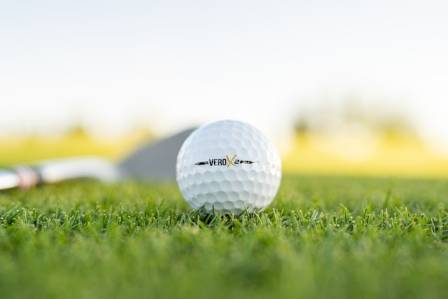
The golf ball we know today has undergone numerous transformations throughout history. Its development can be traced through five major stages, beginning in the 14th century with wooden balls and culminating in the modern rubber-core designs. Exploring this history reveals how technology and innovation shaped the game of golf.

S

Sophie Turner

City note

Sunny tip

The full plaza write-up continues below on the positive pulse board.

Board

NYC Good News
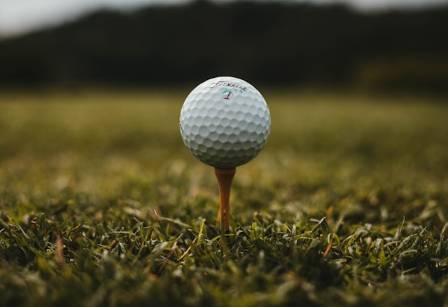
The golf ball we know today has undergone numerous transformations throughout history. Its development can be traced through five major stages, beginning in the 14th century with wooden balls and culminating in the modern rubber-core designs. Exploring this history reveals how technology and innovation shaped the game of golf.
The earliest golf balls are believed to have been made of wood. Although some historians argue that wooden balls were not used on traditional Scottish links courses, evidence suggests they appeared in early golf-like games elsewhere. These wooden balls remain somewhat mysterious, as few physical examples survive, leaving their exact use open to debate.
By the late 15th century, golfers in Scotland were using the “hairy” golf ball, imported from the Netherlands between 1486 and 1618. These balls were handcrafted from leather and stuffed with cow hair or straw. Local Scottish craftsmen eventually produced them domestically, and despite the later introduction of feather-filled balls, the hairy ball remained in use for its affordability well into the early 18th century. It became known as the “common” ball due to its widespread popularity.
In 1618, the featherie golf ball emerged, representing a significant advancement. Like the hairy balls, featheries were made from leather, but they were tightly packed with goose or chicken feathers. This filling made the balls denser and capable of traveling farther than their predecessors. The production process was labor-intensive: feathers and leather were shaped while wet, and as they dried, the leather contracted and the feathers expanded, giving the ball its desired hardness. Once completed, the balls were painted and marked by the maker. Featheries were costly and challenging to produce perfectly round; they also lost distance when wet and could split upon impact. During the early 19th century, Allan Robertson, considered golf’s first professional and leading ball maker, collaborated with the young Tom Morris at St. Andrews to produce featherie balls. When the guttie ball was introduced, Robertson viewed it as a threat to his business, while Morris embraced it as the future of golf, eventually opening his own shop in Prestwick, the site of the first Open Championship.
The Gutta-Percha ball, or guttie, was invented in 1848 by Dr. Robert Adams Paterson. Made from the dried sap of the Malaysian Sapodilla tree, gutties had a rubber-like consistency that allowed them to be heated and molded into a spherical shape. These balls were inexpensive, easy to repair, and aerodynamically superior to featheries. It was soon discovered that the marks left on a ball from being struck actually improved its flight. This led makers to deliberately create indented surfaces, producing consistent flight patterns. By 1890, molded gutties with patterns such as the bramble design—small raised bumps resembling the fruit—became standard, making the balls more uniform and affordable.
The next major leap came in 1898 when Coburn Haskell, inspired by experiments with rubber threads, developed a ball with a wound rubber core. With guidance from Bertram Work of the B.F. Goodrich Company, Haskell covered the wound core with a thin outer layer of balata sap, creating the first modern rubber-core golf ball. Initially, these balls featured bramble-style surfaces similar to the guttie, but by the early 20th century, concave dimples were introduced, enhancing flight performance and control. Over time, new materials such as Surlyn and urethane blends replaced balata, offering more durable covers resistant to indentations. Balls began to be classified by the number of layers, from two-piece to four-piece designs, allowing manufacturers to produce balls optimized for distance, spin, or control. The modern rubber-core ball, perfected through these innovations, remains the standard today. Despite variations in design, all golf balls must conform to rules set by the Royal & Ancient and the United States Golf Association, including a minimum diameter of 1.680 inches, a maximum weight of 1.620 ounces, and strict spherical symmetry.
From wooden spheres to sophisticated rubber-core constructions, the golf ball’s evolution demonstrates a continuous interplay between craftsmanship, science, and innovation, shaping the way the game is played today.

More from the plaza

BK

BLOCK · en

Which Is Better: 7-Seater SUV, MPV or 8-Seater Car?

Which Is Better: 7-Seater SUV, MPV or 8-Seater Car?

For car buyers needing a practical vehicle to carry seven people, the choice was once simple: a multi-purpose vehicle (MPV). Today, however, the market offers more options, including large sports utility vehicles (SUVs) and even van-based eight-seater cars. This guide helps you decide which type—7-seater SUV, MPV, or 8-seater—is best suited to your needs, along with key insights and top picks for each category.

BK

BLOCK · en

Coffee Cups: What You Need to Know Before Choosing!

Coffee Cups: What You Need to Know Before Choosing!

Are you a home barista searching for the right coffee cups? If you enjoy preparing espresso-based drinks at home, choosing the right cup can make a bigger difference than you might expect. After trying and comparing many different styles, we have learned which features are worth considering before buying. This guide is especially useful for anyone who owns an espresso machine and wants to make the most of every homemade coffee.

BK

BLOCK · en

The Fascinating Evolution And Defining Features Of Genuine Luxury Automobiles

The Fascinating Evolution And Defining Features Of Genuine Luxury Automobiles

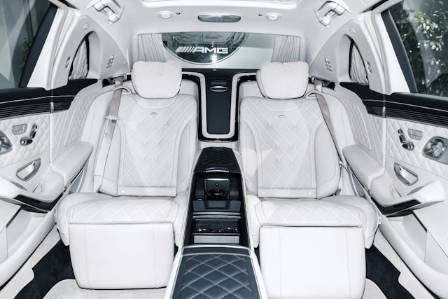
A high end vehicle represents a specific classification of passenger transport. It provides exceptional comfort along with advanced amenities and premium equipment. Manufacturers utilize costly materials to finish the interior and exterior surfaces. Buyers naturally anticipate superior construction quality from these expensive models. The actual definition remains fluid and highly personal. It represents the measurable attributes of the machine. It also depends heavily on the public prestige of the automotive brand. High end marques generally sit above entry level premium labels. However a definitive boundary between these two tiers rarely exists. These premium machines appear in various body configurations. They include agile sports models as well as massive executive sedans and sport utility vehicles. Smaller compact variants have also carved out a specific market presence.

BK

BLOCK · en

Traditional Thai Attire: A Guide to Styles, Etiquette, and Acquisition

Traditional Thai Attire: A Guide to Styles, Etiquette, and Acquisition

The vibrant spectrum of Thai traditional clothing serves as a profound window into the nation's historical soul and artistic legacy. For travelers exploring the kingdom, understanding the nuances of these garments—from their complex weaves to their cultural symbolism—offers a more intimate connection to the local way of life. These outfits are far more than mere historical relics; they are living expressions of Thai identity that continue to grace modern ceremonies and festivals.

BK

BLOCK · en

9 Most Beautiful Forests for Hiking

9 Most Beautiful Forests for Hiking

Few experiences compare to walking through a sun-dappled forest, surrounded by rustling leaves and birdsong. From ancient woodlands to mist-shrouded cloud forests, these nine destinations offer some of the world's most magical hiking experiences.

BK

BLOCK · en

11 Facts You Absolutely Need to Know About the Most Beautiful Reefs in the Ocean

11 Facts You Absolutely Need to Know About the Most Beautiful Reefs in the Ocean

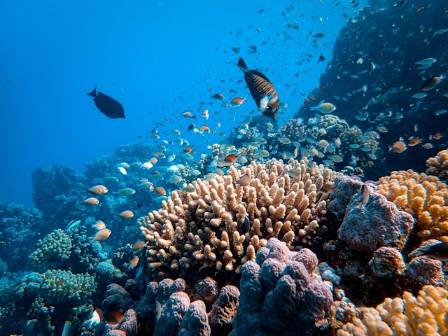
Tiny marine organisms known as polyps construct the foundational stone-like framework of coral reefs. These creatures generate protective external skeletons around their delicate forms. Living in densely packed communities, coral polyps accumulate their calcium carbonate structures—extracted from seawater—layer upon layer across generations.