Plaza story
Must-Know Illustration Styles for Designers
Illustration plays a key role in shaping how we perceive and interact with visuals—whether on websites, in advertising campaigns, or across social media platforms. Each illustration style carries a distinct personality, offering unique ways to convey messages effectively. Knowing the top illustration styles can help you select the best approach for your creative projects.
Ava Grace
City note
Sunny tip
The full plaza write-up continues below on the positive pulse board.
Board
NYC Good News
Illustration plays a key role in shaping how we perceive and interact with visuals—whether on websites, in advertising campaigns, or across social media platforms. Each illustration style carries a distinct personality, offering unique ways to convey messages effectively. Knowing the top illustration styles can help you select the best approach for your creative projects.
Exploring different methods reveals a spectrum—from minimal, clean visuals to highly detailed, playful, or exaggerated designs. This diversity allows you to match the style with your project’s tone, purpose, and audience, making your work more impactful and memorable.
1) Minimalist Illustration
Minimalist illustration emphasizes simplicity. By using clean lines, basic shapes, and a restrained color palette, you can communicate ideas clearly without overwhelming details.
This style is often seen in branding, editorial layouts, and digital interfaces. Stripping away unnecessary elements draws attention to the core message, providing clarity and focus.
Negative space is a powerful tool in minimalist designs, creating balance and making the main subject stand out. Its adaptability across print, web, and mobile platforms ensures consistency while keeping visuals simple.
Experiment with limiting your color scheme to two or three tones to focus on form and composition rather than embellishments.
Example: Minimalist camper van illustration on a pink desert with soft hills under a pale sky.
2) 3D Illustration
3D illustration brings depth and dimension to your visuals, creating a tactile, almost lifelike quality. This approach works well for product designs, app interfaces, and modern branding.
Even simple objects gain visual interest with rounded shapes, shadows, and realistic textures. Stylized 3D—using bold colors or simplified forms—can add a playful feel while retaining depth and perspective.
Adjusting lighting and camera angles allows you to guide focus or create specific moods. The increasing accessibility of 3D software makes it easier for designers to experiment and quickly bring ideas to life.
Example: Abstract 3D shapes in pastel tones forming a whimsical composition.
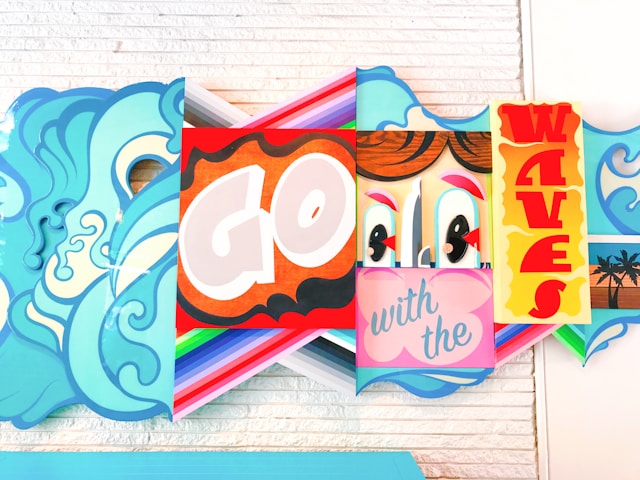
3) Retro Illustration
Retro illustration taps into nostalgia, drawing inspiration from mid-20th century aesthetics. Popular influences include the 1950s to 1980s, Art Deco, Pop Art, and vintage advertising styles.
Bold colors, geometric shapes, and textured details create a classic yet timeless feel. Retro visuals often help audiences connect emotionally, adding familiarity and charm.
This style is effective for branding, packaging, and editorial projects, balancing historic appeal with modern relevance.
Example: Vintage-inspired woman cooking, with playful retro color tones.
4) Geometric Illustration
Geometric illustration relies on fundamental shapes—circles, squares, triangles—to create structured and organized visuals. Thoughtful arrangement of shapes produces clarity and balance, making designs easy to comprehend.
This style is highly versatile, suitable for both minimal and detailed compositions. Designers can use symmetry, repetition, and alignment to achieve polished results without complex tools.
Example: Colorful geometric art depicting a shopping scene with structured patterns.
5) Bold and Eye-Catching Illustration
Big, bold illustrations use vibrant colors, strong shapes, and high contrast to immediately grab attention. This approach works well in advertising, posters, and branding, where the message needs to stand out clearly.
Oversized elements, exaggerated proportions, and thick outlines enhance impact while keeping the visuals approachable. This style is memorable because it communicates energy and clarity without relying on fine details.
Example: Two characters in playful poses with bright, contrasting backgrounds.
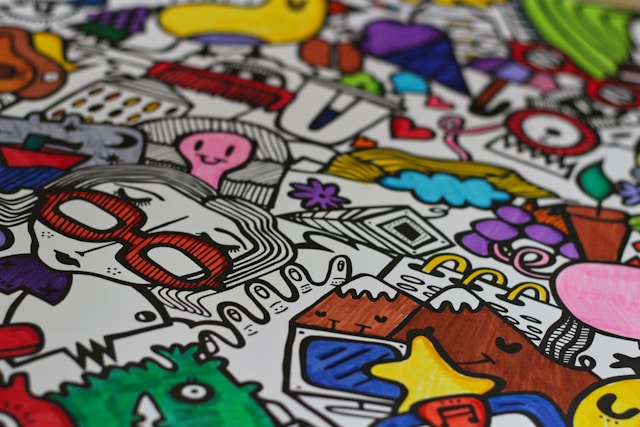
6) Typography Illustration
Typography illustration transforms text into a visual element. Letters are used as shapes, patterns, and design components rather than just words to read.
Designers can experiment with fonts, hand-drawn lettering, and custom type, adjusting scale, spacing, and color to create personality. This style works well for posters, book covers, and branding.
It offers the flexibility to make text both informative and visually engaging, blending words seamlessly with graphic elements.
Example: Colorful, hand-lettered text with playful scribbles integrated into a poster design.
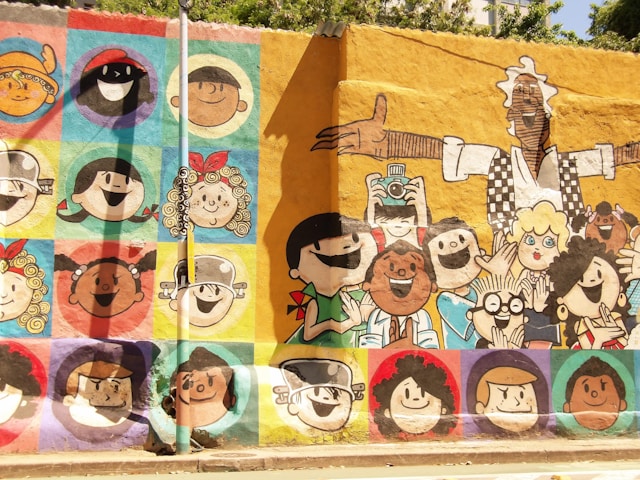
7) Caricature Illustration
Caricature emphasizes exaggeration for a playful or humorous effect. It often highlights facial features, gestures, or proportions, capturing personality quickly and memorably.
This style is adaptable to both traditional hand-drawn methods and digital tools. Artists may lean toward realistic exaggeration or cartoon-like simplicity, tailoring the look to the audience or project.
Caricature is common in editorial work, event portraits, and entertainment design, helping to convey humor or personality while making subjects approachable.
Tip: Focus on one feature—like eyes or posture—and exaggerate it to see how it changes the visual impact, balancing humor with recognition.
By understanding and applying these illustration styles, designers gain a diverse toolkit for expressing ideas visually. Each approach offers unique ways to communicate, engage audiences, and create memorable, effective designs.
More from the plaza
BLOCK · en

An Introductory Guide to the Art of Paper Cutting
As part of our mission to encourage the exploration of new artistic techniques, we are sharing insights into one of our favorite crafts: paper cutting. This art form is celebrated not only for its beautiful results but also for the meditative focus it requires. Engaging in a paper cutting project allows you to disconnect from daily stressors and immerse yourself in a relaxing creative flow. While it may take a few sessions to find your rhythm, the sense of tranquility it provides is immense.
BLOCK · en

Idyllic U.S. Small Towns That Transform into Winter Wonderlands
As the season transitions to winter, the allure of travel beckons. The good news is you don't need a passport to savor the magic of the upcoming chilly months. Across the United States, you'll discover a tapestry of snow-capped mountains, serene farmlands, cozy inns, and a myriad of outdoor activities. These picturesque small towns promise a winter escape that's nothing short of enchanting.
BLOCK · en

The Eight Bear Species of the World
The North American Black Bear is the most widespread bear species on the continent, inhabiting areas from Florida in the south, across Canada, and as far north as Alaska. Although its name suggests a black coat, this species can appear in several color variations, including black, bluish-black, brown, and the rare white Kermode or Spirit Bear found mainly in northwestern British Columbia, Canada. Black and brown color phases are the most commonly seen.
BLOCK · en

Ballerina Orchids: Characteristics And Cultivation
The Oncidium orchid group includes more than 400 recognized species and is highly valued by orchid collectors for its graceful flowers and distinctive appearance. Commonly nicknamed the “dancing lady orchid” because of its flower shape, this genus is admired for its beauty, diversity, and ability to adapt to a range of growing conditions.
BLOCK · en

Pineapple: 5 Science-Backed Health Benefits & Easy Ways to Enjoy It
Pineapple (Ananas comosus) is more than just a sweet, tropical delight—it’s a nutritional powerhouse deeply cherished across Southeast Asia for its vibrant flavor, year-round availability, and affordable price point. Native to South America, this spiky fruit made its way to Southeast Asia centuries ago, where it quickly became a staple in local cuisines, street food, and home kitchens. Its juicy, tangy-sweet taste, versatility in both sweet and savory dishes, and ability to thrive in tropical climates have solidified its status as a favorite among young and old alike. Beyond its deliciousness, pineapple is packed with essential nutrients, enzymes, and antioxidants that offer a range of health benefits, from supporting immunity to easing digestion. Below, we dive into the science behind pineapple’s health perks, share practical tips for selecting and storing it, and explore easy, flavorful ways to incorporate it into your daily diet—backed by insights from dietitian Phoebe Thong of Outram Community Hospital (OCH), part of the SingHealth group.
BLOCK · en

Greater Fort Lauderdale Beaches
As one of Florida’s standout regions, Greater Fort Lauderdale stretches along 24 miles of soft golden coastline, offering some of the state’s most enjoyable beach experiences. From lively promenades filled with restaurants and bars to quiet stretches focused on nature and water activities, the area caters to every kind of beach visitor. Visitors are encouraged to pack sunscreen, swimwear, and sandals and head to the shore for a full day of sunshine, ocean breezes, and coastal relaxation.