The 13 Most Colorful Daisies

Plaza story

The 13 Most Colorful Daisies

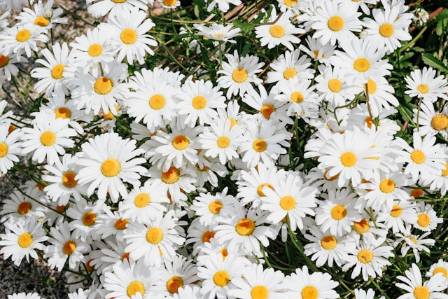
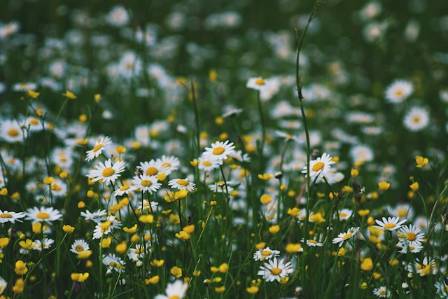
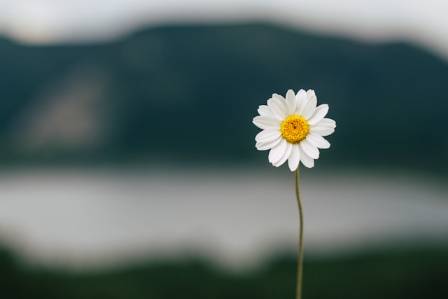
Daisies bring joy to gardens with their bright centers and striking petals. The name "daisy" originates from the Old English word dægeseage, meaning "day's eye," as these flowers bloom under sunlight and close at night.

A

Amy

City note

Sunny tip

The full plaza write-up continues below on the positive pulse board.

Board

NYC Good News

Daisies bring joy to gardens with their bright centers and striking petals. The name "daisy" originates from the Old English word dægeseage, meaning "day's eye," as these flowers bloom under sunlight and close at night.
"Daisies are wonderfully uplifting flowers that add charm to any garden," says Alex Worley, a certified master gardener and owner of Gardenine. "Beyond their beauty, some varieties also help repel garden pests, including mosquitoes."
Fortunately, these resilient and low-maintenance flowers from the Asteraceae family come in many varieties. Here are eight types of daisies to consider for adding vibrant colors to your garden.

Types of Daisies

Daisies come in a range of colors, from classic white petals with yellow centers to shades of red, pink, and violet. Below are some of the most well-known varieties and their ideal USDA growing zones.

English Daisy

The English daisy (Bellis perennis), also called the common daisy, is typically white but can also be found in pink and rose hues. Its bright yellow center is a signature feature. English daisies are perennial in zones 4 to 8 but may behave as biennials or annuals in different climates.

African Daisy

The African daisy (Osteospermum spp.) resembles the English daisy but features more vivid colors, including yellow, pink, fuchsia, blue, and purple. Native to South Africa, they are also known as Cape daisies and often have striking metallic-colored centers. They thrive in zones 10 and 11.

Gloriosa Daisy

Commonly known as Black-Eyed Susans, Gloriosa daisies (Rudbeckia hirta) are easy-to-grow perennials with golden-yellow petals that may be accented with fiery red around a dark brown center. These hardy flowers flourish from summer to fall and grow in zones 3 through 10.

Blue Marguerite Daisy

The Blue Marguerite daisy (Felicia amelloides), also called the blue daisy bush, has stunning sky-blue petals and bright yellow centers. This compact, bushy plant remains evergreen in warmer climates and grows best in zones 9 to 11.

Shasta Daisy

The Shasta daisy (Leucanthemum × superbum) resembles the traditional daisy with large white petals and a golden center. This hybrid combines features of European and Japanese daisies and flourishes in zones 5 to 9.

Cape Daisy

The Cape daisy (Dimorphotheca ecklonis), also known as Cape Marguerite, is a perennial shrub that grows up to 3 feet tall. Its blooms can be pink, white, or purple with dark centers encircled by a blue-violet ring. It thrives in zones 9 through 11.

Indian Chrysanthemum Daisy

The Indian Chrysanthemum daisy (Chrysanthemum indicum) features vibrant yellow or white flowers with deeply lobed dark green leaves. It grows annually in all zones but can be perennial in zones 7 through 12.

Gerbera Daisy

The Gerbera daisy (Gerbera jamesonii) produces large, colorful blooms in shades of yellow, orange, pink, red, and white. Native to South Africa, these daisies are hardy in zones 8 through 10 but can be grown as annuals in cooler regions.

Desert Star Daisy

The Desert Star daisy (Monoptilon bellidiforme) thrives in arid environments, particularly in the American Southwest. These tiny, low-growing flowers are white or tinged with purple or pink and flourish in zone 9.

Dahlberg Daisy

Dahlberg daisies (Thymophylla tenuiloba), also called golden fleece, are annuals native to Texas and Mexico. These drought-tolerant flowers prefer sandy, well-draining soil and grow in zones 9 and 10.

Livingstone Daisy

The Livingstone daisy (Dorotheanthus bellidiformis) is a low-growing succulent with flowers in shades of pink, purple, cream, orange, and yellow. These sun-loving, drought-resistant plants perform best in zones 10 and 11.

Michaelmas Daisy

Also known as the New England Aster, the Michaelmas daisy (Symphyotrichum spp.) is usually light purple and thrives in marshy areas. This adaptable plant can tolerate nutrient-poor soil and varying light conditions. It grows in zones 4 to 8.

Cape Marigold Daisy

The Cape Marigold daisy (Dimorphotheca sinuata), native to South Africa, is an annual with vivid orange blooms. It works well as ground cover or a filler between shrubs and grows best in zones 8 to 10.
Each of these daisy varieties offers unique beauty and resilience, making them excellent choices for any garden.

More from the plaza

BK

BLOCK · en

Elbphilharmonie Hamburg – Spectacular architecture for a boundless music experience

Elbphilharmonie Hamburg – Spectacular architecture for a boundless music experience

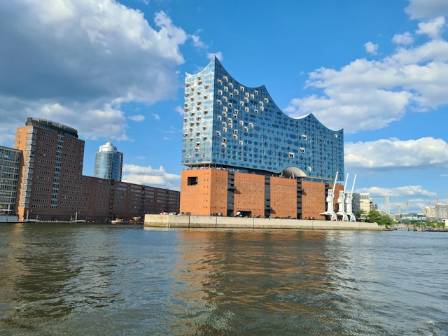
The Elbphilharmonie was created by the celebrated Swiss architectural practice Herzog & de Meuron. Rising above a brick warehouse base known as the former Kaispeicher A, the building combines Hamburg’s industrial heritage with a strikingly modern design. The original warehouse was constructed at the harbor between 1963 and 1966 and was once used to store commodities such as tea, tobacco and cocoa. Above this historic foundation, the glass upper structure rises approximately 110 metres into the Hamburg skyline, crowned by a distinctive roofline that resembles ocean waves.

BK

BLOCK · en

Learning About Red-Breasted Mergansers Key Facts and Insights

Learning About Red-Breasted Mergansers Key Facts and Insights

When we think of ducks, we often picture birds that munch on pond weeds and other green plants—round, highly buoyant creatures that bob on the water’s surface like floating bath toys. But there’s at least one group of ducks that defies all these common assumptions. Mergansers, a genus of ducks, retain the raptor-like traits of their ancestors, and the red-breasted merganser stands out as an exceptional example of this. The reddish breast that gives this species its common name is most visible in males when they have their breeding plumage.

BK

BLOCK · en

The Symphony of Nature: An Expedition into the Harmonious Dance of Life in the Wild

The Symphony of Nature: An Expedition into the Harmonious Dance of Life in the Wild

The natural world is akin to a grand symphony, where every component performs its distinct role in weaving an exquisite tapestry of balance and harmony. In this piece, we embark on an immersive odyssey to unravel the intricate network of life in our pristine surroundings. From the intricate dynamics of ecosystems to the enthralling adaptations of various species, we peel back the layers to reveal the breathtaking marvels that render nature truly magnificent.

BK

BLOCK · en

Top 10 best looking vintage record players

Top 10 best looking vintage record players

We admit it: appearance matters to us almost as much as performance. Maybe even a little more. Call us superficial, accuse us of being distracted by design, or tell us we’re overlooking the real purpose of a record player. It won’t change our opinion that a great turntable should also be beautiful to look at. For us, a big part of the vinyl experience is enjoying the way the equipment looks and feels.

BK

BLOCK · en

The Ultimate Guide to Selecting a Truly Comfortable Sofa

The Ultimate Guide to Selecting a Truly Comfortable Sofa

In an era where we spend countless hours working, relaxing, and even dining on our couches, finding the right one is essential for a high-quality lifestyle. However, balancing aesthetic appeal with physical comfort is often a long and exhausting journey. After extensive research and testing various floor models, we have compiled the definitive guide on what to look for in a sofa that feels as good as it looks.

BK

BLOCK · en

The 2-Inch Rule: Why Your Nightstand Shouldn’t Touch Your Bed

The 2-Inch Rule: Why Your Nightstand Shouldn’t Touch Your Bed

The Verdict:​ For optimal bedroom design, your nightstand should never sit flush against your bed. Maintaining a small gap of 2 to 4 inches is the key to a space that feels organized, functional, and visually spacious. Let’s explore why this small distance makes a significant difference in both the aesthetics and practicality of your bedroom.