Plaza story
Body of Iron, Soul of Fire: The Statue of Liberty
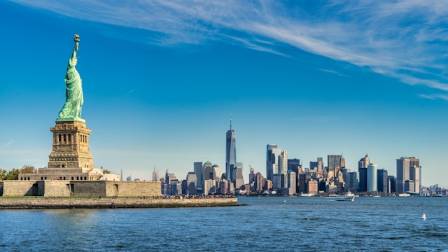
“The Statue of Liberty Enlightening the World” was a gift from France to the United States. It was officially dedicated on October 28, 1886, and later declared a National Monument on October 15, 1924, marking 100 years since its recognition.
Olivia Bennett
City note
Sunny tip
The full plaza write-up continues below on the positive pulse board.
Board
NYC Good News
“The Statue of Liberty Enlightening the World” was a gift from France to the United States. It was officially dedicated on October 28, 1886, and later declared a National Monument on October 15, 1924, marking 100 years since its recognition.
Origins and Purpose
The Statue of Liberty has stood in New York Harbor since 1886. It was designed through a collaboration between French sculptor Frédéric Auguste Bartholdi and historian Édouard de Laboulaye.
Their goal was to symbolize friendship between France and the United States and to honor the centennial of American independence.
Early Development and Funding
Progress was slowed by the Franco-Prussian War, but by 1875 Bartholdi had begun designing the statue while Laboulaye worked to secure funding. France agreed to finance the statue itself, while the United States was responsible for building the pedestal.
Once fundraising in France succeeded, construction began. After the original internal engineer Eugène Viollet-le-Duc died in 1879, Gustave Eiffel—later famous for the Eiffel Tower—took over the structural framework design.
Gift Presentation and Public Support
On July 4, 1884, France formally presented the completed statue in Paris, and U.S. diplomat Levi P. Morton accepted it on behalf of the American people.
However, the pedestal in New York still lacked funding. To raise awareness, the statue’s torch arm was displayed at the 1876 Centennial Exposition in Philadelphia and later exhibited in Madison Square Park from 1877 to 1882.
Fundraising Efforts in the United States
The statue’s torch display allowed visitors to climb inside and view it for a small fee, helping raise public interest.
In 1883, poet Emma Lazarus wrote “The New Colossus,” which included the famous line: “Give me your tired, your poor…” The poem was later engraved on a bronze plaque inside the pedestal.
When funding again fell short, newspaper publisher Joseph Pulitzer helped complete the pedestal budget by encouraging small donations and publishing donor names publicly.
Construction and Assembly in New York
The statue arrived in New York on June 17, 1885, packed in 214 crates. It was then reassembled on site.
On October 28, 1886, the completed monument was officially dedicated. President Grover Cleveland, who had once opposed funding the pedestal, accepted it on behalf of the nation and praised its symbolic meaning.
Design and Structure
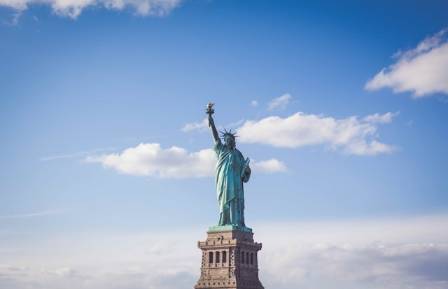
The statue was inspired by Libertas, the Roman goddess of freedom. In her right hand she holds a torch, and in her left she carries a tablet engraved with July 4, 1776 in Roman numerals.
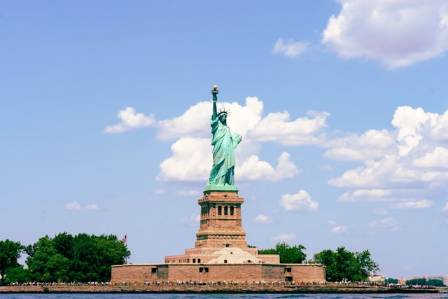
It is constructed from thin copper sheets over an internal iron framework. The statue stands 151 feet tall, and with its pedestal, the total height reaches about 305 feet.
Symbolism and Cultural Meaning
Due to its location near Ellis Island, the Statue of Liberty became a powerful symbol of hope for immigrants arriving in the United States.
This symbolism was formally recognized when President Lyndon B. Johnson signed the Immigration Act of 1965 at its base.
National Monument Status and Restoration
On October 15, 1924, President Calvin Coolidge used the Antiquities Act to designate the statue as a National Monument.
Since 1933, it has been managed by the National Park Service and remains one of the most visited landmarks in New York City.
A major restoration was completed in 1986 to celebrate its centennial, accompanied by national celebrations and public events.
The Statue Today
A replica of the original deed of gift is displayed at the National Archives in Washington, D.C. The exhibit is part of the “Yearning to Breathe Free” gallery, referencing Emma Lazarus’s poem.
Today, the Statue of Liberty continues to represent freedom, opportunity, and international friendship, remaining one of the most recognizable monuments in the world.
More from the plaza
BLOCK · en
World’s Most Iconic Lighthouses: Beacons of History and Beauty
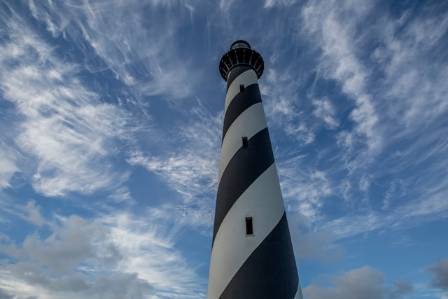
Lighthouses have long held a special place in the hearts of travelers, with their rich histories and stunning locations captivating imaginations across the globe. For centuries, these towering coastal sentinels have guided ships safely to shore, standing as enduring symbols of hope, resilience, and human ingenuity. From rugged shorelines battered by waves to serene islands tucked away in distant seas, each lighthouse tells a unique story of maritime heritage, while offering breathtaking views that make the journey to visit them well worth the effort. Here, we explore ten of the world’s most famous lighthouses, each with its own distinct charm and significance.
BLOCK · en
5 Enchanting Creatures In Asia
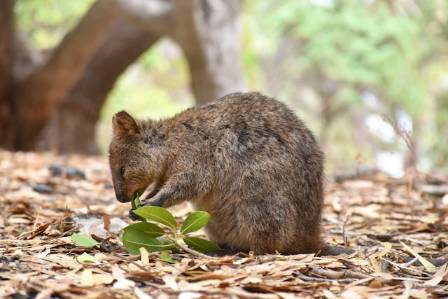
Indian Rhinoceros (India, Asia) The Indian Rhinoceros claims the top spot as the most endearing animal, defying stereotypes with its natural charm. Its large, expressive eyes and disproportionate body create a "gentle giant" effect, making it a beloved member of India's wildlife.
BLOCK · en
The Best Boardwalk Beaches You'll Find At The Jersey Shore
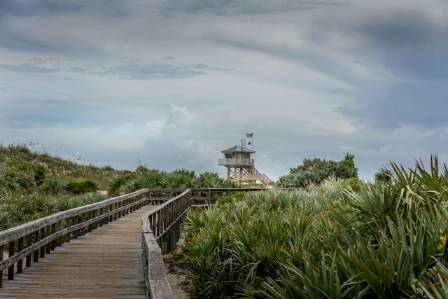
Few destinations capture the spirit of seaside living quite like the Jersey Shore. For generations, millions of visitors from along the East Coast have traveled to New Jersey’s coastline, where every shore town offers its own special charm. Some places attract travelers with exciting casinos, lively amusement parks, and oceanfront entertainment, while smaller communities invite visitors to slow down with charming shops, local restaurants, and peaceful beachside experiences.
BLOCK · en
Silver Pheasant: A Striking Bird of Beauty and Speed
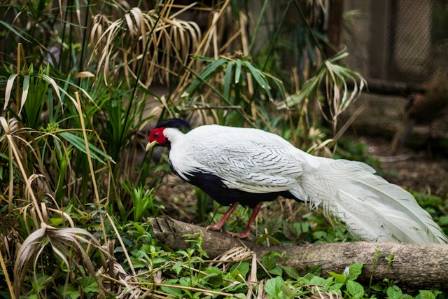
The silver pheasant is famous for its striking breeding-season courtship behavior. During the display, the male rapidly flutters his wings, creating a characteristic drumming noise that can carry over a considerable distance. The species has also held an important place in East Asian culture for centuries. It frequently appears in traditional Chinese artwork and poetry and was sometimes given the name “White Phoenix.”
BLOCK · en
Incredible and Surprising Facts About Australian Kangaroos
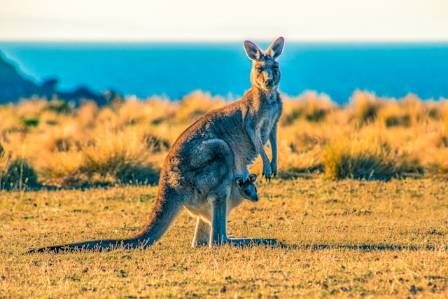
No animal represents the wild spirit of Australia quite like the famous kangaroo. These adorable bouncing creatures are known across the globe. You might think you know everything about these unique marsupials. However they hide some truly mind-boggling biological secrets.
BLOCK · en

32 Creative Flower Bed Ideas to Brighten Your Garden
If you're looking to infuse some color into your front yard or craft a serene sanctuary in your backyard, these 32 flower bed ideas will inspire you.