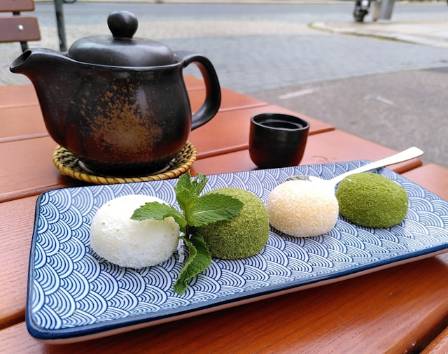
Mochi: From Ancient Japanese Tradition to Global Ice Cream Sensation

Plaza story

Mochi: From Ancient Japanese Tradition to Global Ice Cream Sensation

My/Mochi Ice Cream has taken the global snack scene by storm, captivating taste buds with its delightful combination of chewy sweet rice dough and creamy premium ice cream. This innovative treat has become a beloved indulgence worldwide, making “mochi” a household name synonymous with a fun, portable ice cream experience. Yet, few may realize that the word “mochi” carries a far richer, more profound history rooted in Japanese culture—one that stretches back centuries, woven into rituals, social hierarchies, and daily life. Beyond the trendy ice cream wrapper lies a food with deep cultural significance, a symbol of sustenance, good fortune, and tradition. As we explore what mochi truly is, its place in Japanese society, and its journey from ancient ritual to modern snack, we uncover a story that connects past and present in every sticky, sweet bite.

E

Evelyn

City note

Sunny tip

The full plaza write-up continues below on the positive pulse board.

Board

NYC Good News


Introduction: Mochi Ice Cream’s Rise and Mochi’s Timeless Legacy

My/Mochi Ice Cream has taken the global snack scene by storm, captivating taste buds with its delightful combination of chewy sweet rice dough and creamy premium ice cream. This innovative treat has become a beloved indulgence worldwide, making “mochi” a household name synonymous with a fun, portable ice cream experience. Yet, few may realize that the word “mochi” carries a far richer, more profound history rooted in Japanese culture—one that stretches back centuries, woven into rituals, social hierarchies, and daily life. Beyond the trendy ice cream wrapper lies a food with deep cultural significance, a symbol of sustenance, good fortune, and tradition. As we explore what mochi truly is, its place in Japanese society, and its journey from ancient ritual to modern snack, we uncover a story that connects past and present in every sticky, sweet bite.

What Exactly Is Mochi?

While in the context of Mochi Ice Cream, “mochi” refers specifically to the soft, chewy sweet rice dough that encases the ice cream, its definition in Japan is far broader: mochi is a traditional rice cake made from glutinous rice (also known as sticky rice) that is steamed and then pounded into a smooth, elastic mass. This simple yet labor-intensive process yields a dense, chewy texture that sets mochi apart from other rice-based foods. Nutritionally, mochi is remarkably filling— a small piece, roughly the size of a matchbox, provides the caloric equivalent of a full bowl of rice. This made it an ideal food for samurai during feudal Japan: portable, energy-dense, and capable of keeping them satiated during long battles or journeys. Historically, mochi was also crafted from red rice and played a sacred role in Shinto rituals, where it was revered as “food of the gods” (kami no shoku) due to its pure, simple ingredients and nourishing properties. Beyond its practical and sacred uses, mochi has long been a symbol of good fortune and harmonious marriages in Japanese culture, its sticky texture representing bonds that hold people together.

Mochi’s Deep Roots in Japanese Society
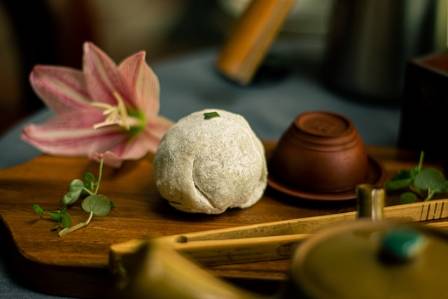
Mochi has been an integral part of Japanese life since at least 794 CE, the start of the Heian period, and its significance has endured through centuries of social change. Most notably, mochi is a centerpiece of New Year’s celebrations (shōgatsu) in Japan, a tradition that remains unbroken to this day. During this time, mochi is sold in markets, prepared in households, and exchanged as gifts, serving as a “sign of the season” that marks new beginnings and prosperity. Throughout history, different varieties of mochi have carried distinct symbolic meanings: for example, round mochi cakes (kagami mochi) are displayed during New Year’s to represent the sun and divine protection, while savory mochi dishes like ozoni (mochi in soup) are eaten to usher in good luck for the year ahead. Mochi’s association with good fortune made it a staple among the aristocratic class, who consumed it regularly to align themselves with prosperity and divine favor. Even today, mochi’s presence in Japanese society extends beyond celebrations—it is a comfort food enjoyed year-round, bridging ancient traditions with modern daily life.

The Multifaceted Meaning of Mochi

Mochi is far more than just a culinary delight; it is a cultural touchstone that embodies multiple layers of meaning. On a practical level, its high calorie density and portability made it a vital source of sustenance for samurai, farmers, and travelers in pre-modern Japan, offering long-lasting energy in a compact form. Symbolically, it is deeply tied to luck, unity, and sacredness—from its role in Shinto rituals honoring the gods to its presence at weddings, where its stickiness symbolizes the enduring bond between spouses. For the aristocracy, mochi was a status symbol, a food that reflected their connection to tradition and divine favor. For ordinary people, it was a comfort food that marked special occasions and provided nourishment during hard times. Today, this duality remains: mochi is both a beloved snack enjoyed for its chewy texture and sweet flavor, and a reminder of Japan’s rich cultural heritage, carrying meanings that have been passed down through generations.

Mochi: Beyond the Ice Cream Sensation

While My/Mochi Ice Cream has introduced mochi to a global audience, framing it as a trendy, innovative way to enjoy ice cream, it is important to recognize that mochi itself has a history far older than this modern iteration. The sweet rice dough at the heart of Mochi Ice Cream has existed since at least the 8th century—possibly even earlier—and has played a central role in Japanese culture for millennia. My/Mochi’s genius lies in reimagining this ancient food: making the ice cream experience portable, experimenting with bold new flavors, and adapting it to contemporary tastes. Yet, beneath the modern packaging and creamy filling lies a tradition that has shaped Japanese society, rituals, and identity. Next time you bite into a My/Mochi Ice Cream, take a moment to appreciate the depth of history in that chewy outer layer—this simple rice dough has been a source of sustenance, a symbol of good fortune, and a part of sacred rituals for centuries. Mochi may now be synonymous with ice cream around the world, but its true essence is a testament to the enduring power of traditional foods to evolve and captivate new generations.

More from the plaza

BK

BLOCK · en

The Twisted World of Spiral Noodles

The Twisted World of Spiral Noodles

Spiral noodles, sometimes called corkscrew or helix pasta, are a type of pasta beloved worldwide for their distinctive twisted shape and incredible versatility. These noodles have become a common ingredient across many culinary traditions, from Italian classics to Asian favorites, appealing to both children and adults alike. In this article, we’ll explore spiral noodles, covering their origins, varieties, nutritional benefits, and cooking techniques.

BK

BLOCK · en

The Eight Bear Species of the World

The Eight Bear Species of the World

The North American Black Bear is the most widespread bear species on the continent, inhabiting areas from Florida in the south, across Canada, and as far north as Alaska. Although its name suggests a black coat, this species can appear in several color variations, including black, bluish-black, brown, and the rare white Kermode or Spirit Bear found mainly in northwestern British Columbia, Canada. Black and brown color phases are the most commonly seen.

BK

BLOCK · en

10 Must-Try Refreshing Summer Drinks

10 Must-Try Refreshing Summer Drinks

Beat the heat with these vibrant summer beverages featuring tropical fruits, fresh berries, and cooling herbs. From spirited cocktails to family-friendly mocktails, there's something here for every warm-weather occasion.

BK

BLOCK · en

The Prettiest Race Cars Of All Time

The Prettiest Race Cars Of All Time

Race cars are meant to push the limits of engineering. They should be the quickest, most responsive machines on the track, designed purely for performance. If they also happen to look stunning while doing it, that’s just an added bonus. Fortunately, motorsport history is filled with cars that combine breathtaking speed with unforgettable styling.

BK

BLOCK · en

Bird Flower

Bird Flower

Chinese Bird and Flower Painting

BK

BLOCK · en

Soaring Above The Clouds: A Beginner’s Guide To Hot Air Ballooning

Soaring Above The Clouds: A Beginner’s Guide To Hot Air Ballooning

Hot air ballooning offers a rare and exhilarating way to view the world from an elevated perspective. If you’re planning your very first flight, this guide covers the essentials you should understand before you go.