Plaza story
Autonomous Mobile Robots
In the era of the fourth industrial revolution, emerging technologies are becoming essential for improving maintenance operations, security systems, and surveillance activities. Industrial safety monitoring, infrastructure inspection, perimeter surveillance, and predictive maintenance have become critical priorities for organizations across all industries.
Noah Reed
City note
Sunny tip
The full plaza write-up continues below on the positive pulse board.
Board
NYC Good News
In the era of the fourth industrial revolution, emerging technologies are becoming essential for improving maintenance operations, security systems, and surveillance activities. Industrial safety monitoring, infrastructure inspection, perimeter surveillance, and predictive maintenance have become critical priorities for organizations across all industries.
At the same time, many of these tasks are difficult to staff. They often involve hazardous environments, exposure to risk, and work schedules that are irregular or physically demanding. Harsh weather conditions and dangerous industrial zones further increase the challenge of relying solely on human workers.
To address these issues, companies are increasingly adopting autonomous mobile robots (AMRs). These systems can independently navigate environments and perform inspection and monitoring tasks, offering a disruptive approach that improves efficiency, reduces operational costs, enhances safety, and enables work in locations that are otherwise difficult or dangerous to access.
Overview of the Inspection Robotics Industry
The inspection and maintenance robotics sector is expanding rapidly, with annual growth estimated at around 20%. This rise is driven by strong market demand and continuous technological progress.
However, the development of this field is also shaped by a mismatch between innovation speed and regulatory frameworks. In many cases, robotic capabilities advance faster than the legal and regulatory systems designed to govern them, creating ongoing discussion around standards and oversight.
Traditionally, inspection tasks such as patrol operations, anomaly detection, and emergency response have relied heavily on human labor. Yet human operators face limitations including fatigue, reduced attention over time, and difficulties working in hazardous environments such as chemical plants or unstable infrastructure zones.
AMRs are increasingly seen as a complementary solution. They offer several key advantages:
Operational efficiency: Robots can patrol large areas continuously and consistently, regardless of environmental conditions.
Improved safety: They reduce human exposure to dangerous environments, lowering the risk of injury.
Data acquisition: They collect high-quality data such as images, thermal readings, and video, which can be used for analysis, reporting, and compliance purposes.
Despite these benefits, challenges remain, particularly in areas such as cybersecurity, data protection, and regulatory compliance. These issues are now central topics for engineers, policymakers, and researchers.
Research and Innovation in Inspection Robotics
The European Union has launched multiple initiatives to address challenges in industrial robotics and security technology. These efforts aim to strengthen research collaboration while ensuring that innovations respect ethical principles and fundamental rights, especially in sensitive domains such as artificial intelligence and biometric systems.
A key funding program in this area is Horizon Europe (2021–2027), which allocates approximately €1.6 billion to civil security research projects. These initiatives help bridge the gap between academic research and real-world industrial deployment.
Projects under this framework enable companies, universities, and technology institutes to develop advanced robotic systems for inspection and maintenance applications. Mobile robotics has made significant progress through these collaborations, achieving levels of maturity suitable for real operational environments.
Industry experts highlight that autonomous robots are now widely used for monitoring aging infrastructure such as bridges, tunnels, roads, and industrial facilities. They also support specialized tasks like crack detection, surface repair, and automated inspection in hazardous environments.
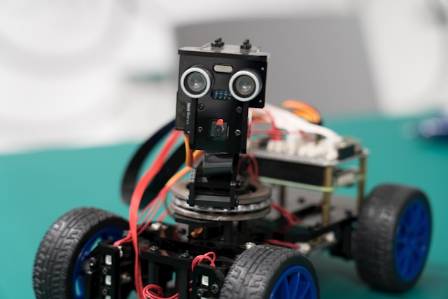
One example is Robotnik’s development of autonomous systems such as RB-WATCHER, designed for inspection and surveillance in complex indoor and outdoor environments.
How Inspection Robots Perceive Their Environment
Modern inspection robots rely on a wide range of sensors to understand and navigate their surroundings. These systems vary depending on the application but generally include advanced perception technologies.
For example, platforms like RB-WATCHER are equipped with systems that allow autonomous navigation using technologies such as 3D SLAM and GPS. These robots can avoid both static and moving obstacles while operating in unpredictable environments.
Typical sensor configurations include:
Depth and RGB cameras
Thermal imaging systems
Motion and proximity sensors
Pan-tilt-zoom cameras
Microphones and communication speakers
These systems allow robots to detect people, vehicles, fire sources, and other anomalies. They can also transmit real-time alerts through communication protocols such as email, REST APIs, or messaging systems like MQTT.
More advanced inspection platforms combine multisensor data with artificial intelligence and machine learning algorithms. This enables deeper environmental understanding, improved anomaly detection, and more accurate decision-making.
Industrial Applications of Inspection Robotics
Inspection robotics can be divided into two main categories: quality inspection and perimeter surveillance.
Quality inspection focuses on analyzing machines, components, and products to detect defects or irregularities using computer vision and precision sensors. Perimeter inspection, on the other hand, involves monitoring facilities and infrastructure to ensure security, prevent unauthorized access, and reduce operational risks.
Energy and Critical Infrastructure
In the energy sector, inspection robots are widely used to monitor power plants, substations, and other high-risk environments. These systems patrol sensitive areas, detect overheating or leaks, and continuously transmit data to control centers for real-time response.
A practical example includes deployments in electrical substations operated by companies such as EDP, where mobile robots perform navigation, thermal inspection, alarm detection, and continuous surveillance tasks.
Another large-scale application involves robotic systems used in long-distance energy transmission tunnels connecting countries such as France and Spain. These robots travel through complex underground infrastructure, collecting data using thermal, gas, and visual sensors to ensure system safety and operational reliability.
Future Development of Inspection Robotics
Advances in artificial intelligence, computer vision, 5G connectivity, and data analytics are expanding the capabilities of autonomous mobile robots. These technologies allow inspection systems not only to perform mechanical tasks but also to interpret complex environments and make intelligent decisions.
As these systems continue to evolve, their use cases will expand further. Future applications are expected to include more autonomous security patrols in industrial sites and potentially even in public spaces, depending on regulatory developments in different regions.
Inspection robotics is therefore transitioning from a specialized industrial tool into a broader technology platform that plays a key role in safety, maintenance, and infrastructure management in the modern digital economy.
More from the plaza
BLOCK · en

The Epic Story of Magnetic Tape: Past, Present and Future
Imagine a world with no way to preserve voices, music, or digital knowledge. Without magnetic tape, countless speeches, cultural treasures, and scientific breakthroughs might have vanished. This unassuming strip of coated plastic reshaped the way humans record, store, and protect information—and its journey is nothing short of extraordinary.
BLOCK · en

6 Best Cherry Pie Recipes That’ll Make Your Grandma Jealous
In the pantheon of classic American desserts, few treats evoke warmth, nostalgia, and homemade comfort quite like a perfectly baked cherry pie. With its flaky, golden crust that shatters at the touch and a sweet-tart filling that bursts with juicy cherry flavor, it’s a dessert that bridges generations—passed down from grandmothers to grandchildren, and reimagined by home bakers eager to put their own spin on tradition. Whether you’re a die-hard fan of time-honored recipes or crave innovative twists that blend classic cherry goodness with unexpected flavors like bourbon, dark chocolate, or honey, the right cherry pie can become your go-to dessert for holidays, potlucks, or lazy weekend afternoons. Below, we’ve curated six exceptional cherry pie recipes, each with detailed instructions, pro tips, and flavor stories that elevate the humble cherry pie to new heights. From a lattice-topped classic with a hint of almond to a honey-sweetened crumble version, these recipes promise to impress even the most discerning pie lovers—and yes, maybe even make your grandma a little jealous.
BLOCK · en

Huangshan Mountain In The Winter
Huangshan Mountain is widely regarded as one of the most breathtaking destinations in the world for hiking and photography, even during the coldest months of winter.
BLOCK · en

The Eurasian Blue Tit: A Comprehensive Profile
The Eurasian Blue Tit (Cyanistes caeruleus) stands out as one of Europe's most recognizable and beloved garden birds. This vibrant species demonstrates remarkable adaptability to various environments while maintaining fascinating behavioral characteristics that continue to captivate ornithologists and bird enthusiasts alike.
BLOCK · en

Steps to a Happy, Colorful Home
Home has always represented comfort and belonging, but in 2020 it became even more central to our everyday lives.
BLOCK · en

The Best Boardwalk Beaches You'll Find At The Jersey Shore
Few destinations capture the spirit of seaside living quite like the Jersey Shore. For generations, millions of visitors from along the East Coast have traveled to New Jersey’s coastline, where every shore town offers its own special charm. Some places attract travelers with exciting casinos, lively amusement parks, and oceanfront entertainment, while smaller communities invite visitors to slow down with charming shops, local restaurants, and peaceful beachside experiences.