Plaza story
The Epic Story of Magnetic Tape: Past, Present and Future
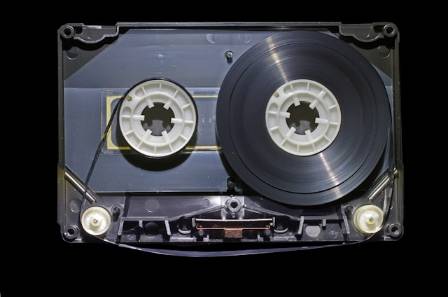
Imagine a world with no way to preserve voices, music, or digital knowledge. Without magnetic tape, countless speeches, cultural treasures, and scientific breakthroughs might have vanished. This unassuming strip of coated plastic reshaped the way humans record, store, and protect information—and its journey is nothing short of extraordinary.
James
City note
Sunny tip
The full plaza write-up continues below on the positive pulse board.
Board
NYC Good News
Imagine a world with no way to preserve voices, music, or digital knowledge. Without magnetic tape, countless speeches, cultural treasures, and scientific breakthroughs might have vanished. This unassuming strip of coated plastic reshaped the way humans record, store, and protect information—and its journey is nothing short of extraordinary.
Early Sparks of Innovation
The concept of magnetic recording first appeared in the 1870s when American inventor Oberlin Smith envisioned capturing sound through magnetism instead of grooves on wax cylinders. His idea involved steel fragments suspended on threads, but he never produced a working machine. The real breakthrough came in 1898, when Danish engineer Valdemar Poulsen created the Telegraphone. By running a recording head along a steel wire, Poulsen proved voices could be magnetically stored and replayed. Although steel wire was fragile and awkward, the foundation of magnetic recording had been laid.
Germany’s Leap Forward
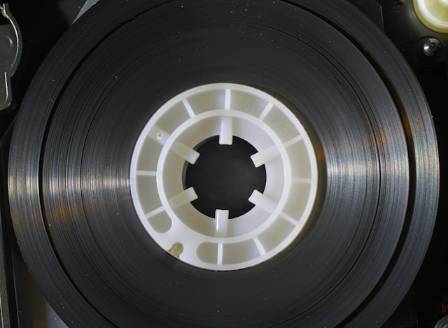
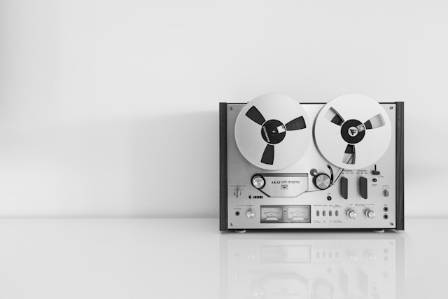
After Poulsen’s patents expired, German innovators pushed the technology further. Curt Stille refined wire recorders, but Fritz Pfleumer provided the real revolution. In 1927, he patented a method of coating paper or plastic strips with iron oxide particles bound by lacquer. Partnering with AEG and BASF, Pfleumer’s concept evolved into the Magnetophon, unveiled in 1935. This reel-to-reel tape astonished listeners with its clarity, quickly becoming the medium of choice for radio and dictation. By the early 1940s, most German broadcasts relied on tape, producing millions of feet of recordings during the war.
Crossing Into Computing
As Allied forces examined captured Magnetophons, American engineers realized tape could do more than store sound. John Mauchly and Presper Eckert, creators of the UNIVAC computer, adopted tape to replace unreliable memory systems. Their UNISERVO I drive, launched in 1951, used metal-coated tape and offered 182 kilobytes of storage—tiny by modern standards but revolutionary at the time. IBM soon followed with the 726 drive, achieving densities of 128 bits per inch and speeds of 100 inches per second, cementing tape as the first practical external storage for computers.
Expanding Through the Decades
By the 1960s, tape was everywhere in business, science, and government. Mainframes filled entire rooms with spinning reels archiving everything from nuclear research to space exploration. Though hard disks eventually overtook tape for day-to-day storage, reels remained the preferred backup option thanks to their durability and cost-effectiveness.
The Rise of Cartridges
From the 1980s onward, tape evolved from bulky reels into compact cartridges. Formats such as 8mm, DLT, and DAT pushed capacities into gigabytes and beyond, with transfer speeds rivaling early networks. By the 1990s, the LTO (Linear Tape-Open) standard unified the industry, ensuring long-term growth and compatibility. Today’s LTO-9 cartridges can hold an astounding 18 terabytes uncompressed while reaching speeds above one gigabyte per second.
Why Tape Still Matters
Despite constant predictions of its demise, magnetic tape remains essential. It stores over half of the world’s digital information, largely because it requires no energy to preserve data for decades and costs far less than maintaining massive disk arrays. Modern robotic tape libraries can hold exabytes of material, making them a cornerstone of enterprise data centers.
Conclusion
From Oberlin Smith’s unrealized sketches to futuristic labs exploring atomic-scale storage, magnetic tape has endured for nearly 150 years. It began with fragile steel wires and grew into the backbone of computing, broadcasting, and data preservation. Even as cloud services and advanced memory systems expand, tape continues to offer unmatched reliability and affordability. Its story proves that sometimes the most modest-looking technology can shape the digital world in ways that last for generations.
More from the plaza
BLOCK · en
Digital chips vs analog chips
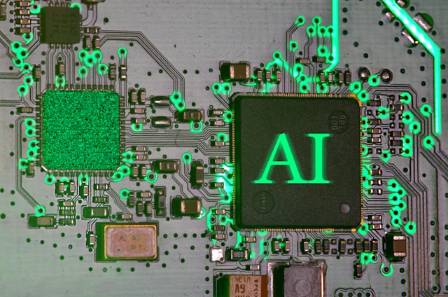
In semiconductor technology, digital chips and analog chips are often discussed together because they serve very different purposes, and the distinction between them is quite clear. Below is an explanation of how digital chips differ from analog chips.
BLOCK · en

5 Essential Tips Every SUV Owner Must Know
Owning and driving a sport utility vehicle (SUV) is a distinct experience compared to owning a standard car. SUVs come with their own set of requirements and potential issues, and it takes a committed approach to truly understand and maintain such a vehicle—ensuring it stays safe and performs well as it should.
BLOCK · en

The 11 Most Beautiful Coastal Cities in the World
Seaside destinations naturally captivate with their vast ocean views and sunlit shores. However, beyond their scenic beauty, many of the world's most stunning coastal cities also bear witness to centuries of transformation, marked by architectural styles and landmarks that narrate their evolving histories. Some have thrived as trading centers for millennia, while others have recently gained recognition as creative hubs for artists and designers.
BLOCK · en

Autonomous Mobile Robots
In the era of the fourth industrial revolution, emerging technologies are becoming essential for improving maintenance operations, security systems, and surveillance activities. Industrial safety monitoring, infrastructure inspection, perimeter surveillance, and predictive maintenance have become critical priorities for organizations across all industries.
BLOCK · en

The Eight Bear Species of the World
The North American Black Bear is the most widespread bear species on the continent, inhabiting areas from Florida in the south, across Canada, and as far north as Alaska. Although its name suggests a black coat, this species can appear in several color variations, including black, bluish-black, brown, and the rare white Kermode or Spirit Bear found mainly in northwestern British Columbia, Canada. Black and brown color phases are the most commonly seen.
BLOCK · en

The World's Largest Turtle: A New Chapter
The leatherback turtle now exhibited at National Museum Cardiff first came to public attention in September 1988, when it was found stranded on Harlech beach in Gwynedd.