Plaza story
Pothos as a Houseplant
Pothos (Epipremnum aureum) is one of the most popular indoor foliage plants because it is adaptable, durable, and extremely simple to care for. This tropical climbing vine originates from the Solomon Islands and is also commonly known as Devil’s Ivy. It has been grown commercially for more than a century and can now be found in homes, offices, and many public spaces around the world. Because of its forgiving nature, pothos is an excellent choice for beginners who are just starting their houseplant journey.
Livia Arden
City note
Sunny tip
The full plaza write-up continues below on the positive pulse board.
Board
NYC Good News
Pothos (Epipremnum aureum) is one of the most popular indoor foliage plants because it is adaptable, durable, and extremely simple to care for. This tropical climbing vine originates from the Solomon Islands and is also commonly known as Devil’s Ivy. It has been grown commercially for more than a century and can now be found in homes, offices, and many public spaces around the world. Because of its forgiving nature, pothos is an excellent choice for beginners who are just starting their houseplant journey.
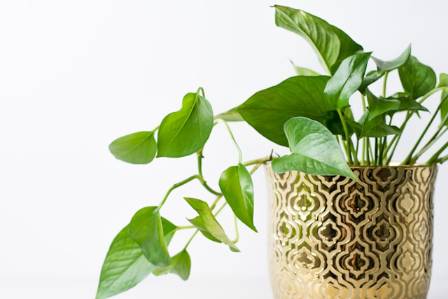
The leaves of pothos are smooth, glossy, and heart-shaped, with a slight fold along the central vein. They usually measure around 3 to 6 inches long and are slightly narrower in width. Depending on the variety, foliage colors range from bright lime green and yellow-green shades to deep green or attractive green-and-white patterns. As a trailing vine, pothos stems can grow 8 to 10 feet long or even longer when given suitable conditions.
Ways to Display Pothos Indoors
Pothos is a flexible plant that works well in many indoor settings. It looks attractive placed in a decorative pot on a plant stand, shelf, tall cabinet, or other elevated surface where its long vines can cascade downward. It is also an excellent option for hanging baskets.
Another interesting growing method is training pothos onto a moss-covered support or totem. With gentle direction, the plant can attach itself using its natural aerial roots, which develop from the nodes along the stems. If you prefer a compact appearance, pothos can also be trimmed regularly to maintain a shorter, fuller shape.
Because of its different growth habits, pothos can serve many purposes in mixed containers. It can act as a trailing “spiller,” a filling plant, or even a dramatic focal element depending on how it is arranged.
Light and Temperature Requirements
Pothos grows best in moderate to bright indirect light and average indoor temperatures between 60°F and 80°F. Direct sunlight should be avoided because strong rays can damage the leaves and cause yellowing.
Although pothos can survive in low-light areas for a long time, it may eventually lose some of its most attractive characteristics. Variegated varieties may become less colorful, while bright-leaved cultivars can lose their vivid appearance. Since pothos naturally grows toward available light, rotating the pot once a week helps encourage more even growth.
Watering Needs
Pothos prefers to be watered only after the soil has partially dried. Excess moisture is one of the main causes of problems because consistently wet soil can lead to root rot.
If the plant becomes too dry, the leaves may temporarily droop, but pothos is generally more tolerant of underwatering than overwatering. This makes it especially suitable for busy households, offices, beginners, or anyone who occasionally forgets to water their plants.
Fertilizing and Pruning
For healthy growth, feed pothos with a balanced houseplant fertilizer once a month during winter and every two weeks during the active growing season.
Regular trimming helps control the length of the vines and encourages a fuller appearance. Use clean, sharp scissors to cut a stem just above a node, or remove an entire vine if needed while leaving a small section of stem behind.
Repotting Pothos
Pothos benefits from being moved into a slightly larger container each spring. Use a high-quality, well-draining soilless potting mixture to provide good root conditions.
Even large plants that remain in the same pot can benefit from occasional refreshing. Remove the plant carefully, trim back some roots, and shorten the vines by up to one-third if necessary. Add fresh soil and avoid heavy watering immediately after repotting, as too much moisture can create extra stress.
Propagation Methods
Pothos is a long-lasting houseplant and can easily be shared with others. Many growers keep the same plant for many years, sometimes even decades.
The easiest way to create new plants is through stem cuttings, especially during spring and summer when growth is active. Propagation can also be done through root division while repotting. Because pothos develops aerial roots at its nodes, layering is another effective method for producing new plants.
Toxicity of Pothos
One disadvantage of pothos is that every part of the plant is poisonous if eaten by humans or pets, although it is not considered deadly. The roots, stems, and leaves contain calcium oxalate crystals, which can irritate the skin, mouth, and digestive system.
For homes with pets or small children, it is best to place pothos where curious hands and animals cannot easily reach it.
Pothos and Philodendron Differences
Pothos is sometimes confused with the vining heartleaf philodendron because both plants belong to the Araceae family and share tropical origins.
One way to tell them apart is by looking at the petiole, the small stalk connecting the leaf to the stem. Pothos petioles have a noticeable groove, especially where they appear to wrap around the vine. Philodendron leaves often emerge with a protective covering called a cataphyll, which eventually dries, turns brown, and falls away. Pothos leaves develop directly from the stem without this extra covering.
Popular Pothos Varieties
There are many attractive pothos cultivars available for indoor growing.
Golden pothos (Epipremnum aureum ‘Golden’) features green leaves decorated with bright yellow patterns.
Jade pothos has solid, deep green leaves without variegation.
Neon pothos produces striking chartreuse-colored foliage with a bright, fresh appearance.
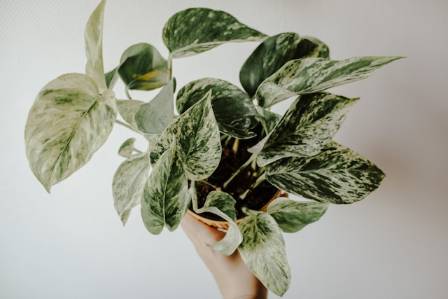
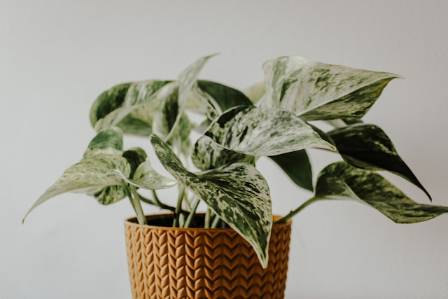
Marble Queen pothos displays green leaves with beautiful white variegated markings.
Lime pothos has yellow-green leaves that create a vibrant tropical look.
Tricolor pothos combines green foliage with white variegation and cream-colored stems.
Interestingly, pothos does not have known hybrid varieties because it rarely produces flowers, even in its natural environment.
Final Thoughts on Growing Pothos
Pothos is a dependable and attractive houseplant that can brighten almost any indoor space. With bright indirect light, occasional watering when the soil becomes dry, and regular but modest feeding, this adaptable vine can thrive for many years.
Its easy care, attractive foliage, and simple propagation make pothos a wonderful plant to enjoy yourself or share with both beginner and experienced plant lovers.
More from the plaza
BLOCK · en

Understanding Minimalist Art: Why Less Is More
Picture this: you're tasked with explaining a concept in just ten words. A challenge, right? Now, consider explaining the same concept using a mere ten words, and you'll find yourself facing the essence of minimalism. In art, sometimes (or often), less truly is more.
BLOCK · en

Greater Fort Lauderdale Beaches
As one of Florida’s standout regions, Greater Fort Lauderdale stretches along 24 miles of soft golden coastline, offering some of the state’s most enjoyable beach experiences. From lively promenades filled with restaurants and bars to quiet stretches focused on nature and water activities, the area caters to every kind of beach visitor. Visitors are encouraged to pack sunscreen, swimwear, and sandals and head to the shore for a full day of sunshine, ocean breezes, and coastal relaxation.
BLOCK · en

Idyllic U.S. Small Towns That Transform into Winter Wonderlands
As the season transitions to winter, the allure of travel beckons. The good news is you don't need a passport to savor the magic of the upcoming chilly months. Across the United States, you'll discover a tapestry of snow-capped mountains, serene farmlands, cozy inns, and a myriad of outdoor activities. These picturesque small towns promise a winter escape that's nothing short of enchanting.
BLOCK · en

Fascinating and Unique Insights Into the World of Penguins
Penguins are among the most recognizable and intriguing birds on the planet. While they are often associated with the icy landscapes of the poles, their history, biological adaptations, and social behaviors reveal a much more complex and surprising story.
BLOCK · en

An introduction to the art technique Ink wash painting
Ink wash painting, known as “sumi-e” in Japan and “shui mo hua” in China, is an ancient art form with a rich legacy spanning over a millennium. It first emerged in China during the Tang Dynasty (618–907 AD), developing as a distinct artistic expression. Early practitioners drew inspiration from calligraphy, emphasizing the fluidity and emotive quality of brushwork.
BLOCK · en

City-Friendly Compact Cars
Urban life brings its own set of transportation hurdles. Tight streets, limited parking, heavy traffic, and constant stop-and-go conditions require vehicles that are nimble, efficient, and easy to handle. Compact cars excel in these environments. Built for city living, they blend fuel efficiency with a small footprint, making them perfect for navigating the urban jungle. Today’s compact cars are not just practical—they come equipped with modern technology, comfortable interiors, and sleek styling, giving drivers the best of both worlds.