Plaza story
The Importance of a Natural Night Sky: Wonder, Stargazing, and Scientific Discover
In an age when artificial lighting increasingly fills the night, the brilliance of human civilization dims the stars above. Yet, amateur astronomers, conservationists, and researchers alike advocate for protecting the natural darkness that once blanketed Earth. While artificial light is useful, we often undervalue the importance of darkness.
Ernest Hemingway
City note
Sunny tip
The full plaza write-up continues below on the positive pulse board.
Board
NYC Good News
In an age when artificial lighting increasingly fills the night, the brilliance of human civilization dims the stars above. Yet, amateur astronomers, conservationists, and researchers alike advocate for protecting the natural darkness that once blanketed Earth. While artificial light is useful, we often undervalue the importance of darkness.
“If the stars came out only once every thousand years, people would be amazed and filled with wonder.” –Ralph Waldo Emerson
The Dark Sky Sparks Wonder, Curiosity, and Inspiration
Looking up at the vast, starry sky stirs a sense of amazement, which has proven benefits. Experiencing awe can improve health, enhance happiness, increase humility, and foster deeper social bonds. It also soothes the nervous system and encourages the release of oxytocin, the hormone linked with love and connection. For many, a fascination with the night sky begins in childhood.
“My first memories of noticing the stars were from the farm where I grew up in rural Arkansas, far from urban lighting,” recalls Dr. Jennifer Wiseman, Senior Astrophysicist at NASA’s Goddard Space Flight Center and Lead Project Scientist for the Hubble Space Telescope. “I would gaze upward, curious about each star, wishing I could visit them and explore.”
Brother Guy J. Consolmagno, head of the Vatican Observatory, fondly remembers stargazing during summers on Lake Huron near Detroit. “I’ve been drawn to the stars for as long as I can remember. My father, who trained as a navigator during WWII, loved the night sky.”
Many others grow up in city environments with limited star visibility. However, they find wonder through images from space missions—Voyager, lunar landings, exotic moons like Europa and Io, and stunning visuals from the James Webb Space Telescope. Science fiction films and series such as Star Wars and Star Trek also spark imagination.
“My first real memory is watching Neil Armstrong’s moonwalk on a grainy black-and-white TV at age six,” says Reverend Professor David Wilkinson of Cranmer Hall Durham. “Growing up with bright city lights made it hard to see stars, but that moment opened my mind to a universe beyond daily life.”
“Hello darkness, my old friend. I’ve come to talk with you again.”
–Paul Simon
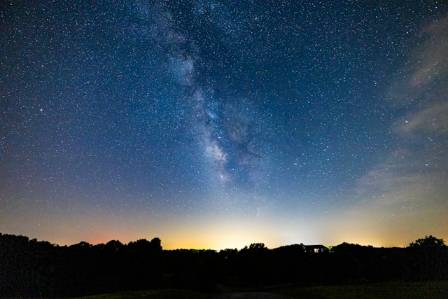
Reconnecting with Human History Through the Night Sky
Dark Sky reserves are vital, says Wiseman. “For most of human history, people would walk outside and look up, reminded of the enormous, mysterious universe above. Only in the past century have we drowned out that experience with artificial lights.”
Brother Guy recalls Pope Benedict’s Easter sermon in 2012: “Our cities shine so brightly now that we can no longer see the stars.”
“The themes of light and dark, present throughout religious texts, have largely been forgotten,” Brother Guy explains. “The sky reminds us we are part of something much greater. I think many people avoid looking up. They flood the sky with light out of fear.”
“We now live in a world where many believe reality is only what’s on a screen. But true reality is what’s out there above us,” he adds.
The Night Sky Fuels Scientific Discovery
Light pollution can interfere even with powerful telescopes. Preserving dark skies allows humanity to peer deeper into the cosmos.
“When you observe the night sky, you're seeing the history of the universe—13.8 billion years of cosmic evolution,” explains Wiseman, whose research focuses on how stars form.
“Professional telescopes let us see ancient galaxies and stars, capturing light that began traveling to Earth millions or even billions of years ago,” she continues. “In our own galaxy, we can see objects as they were thousands of years ago. Beyond it, we observe entire galaxies as they appeared long before humans existed.”
“We now understand that stars often form alongside planets. In fact, nearly every star in our Milky Way has at least one planet, making the universe more welcoming to life over time.”
Discovering the Unseen
“In astrophysics, what’s invisible is often more crucial than what we can observe,” Wiseman says. “Take dark matter—though we can’t see it, we know it’s there through its gravitational influence, like the way it affects how stars orbit in galaxies.”
“On a larger scale, we see dark matter shaping space-time, just as Einstein predicted,” she adds.
“Then there’s dark energy—also invisible, but we know it exists because it causes the universe to expand at an accelerating rate,” she continues. “Dark energy and dark matter pull in opposite directions: gravity draws things together, while dark energy pushes them apart. Their cosmic tug-of-war has shaped the structure of galaxies today.”
“These hidden forces have a greater impact on the universe than visible matter,” says Wiseman.
A Source of Reflection, Spirituality, and Meaning
“A theologian once titled a book Your God Is Too Small,” says Wilkinson.
“For me, astronomy consistently challenges and expands my understanding of the divine. The spectacular views from the James Webb Telescope remind me that our notions of transcendence are often too narrow.”
“The God who created billions of galaxies is far more complex and beautiful than our limited imagination,” he adds. “Beyond being a designer of cosmic order, God is also a vibrant artist full of play, color, and vitality.”
Darkness Is Crucial for Earth’s Life Systems
Natural night skies aren’t just visually stunning—they’re critical for ecological and cultural preservation. Light cycles regulate human biology and are essential to the health of many species. Most mammals and a majority of animal species are active at night. Artificial lighting disrupts their behavior and ecosystems.
“Light pollution doesn’t just erase the stars. It disconnects us from scientific discovery, wonder, and ancestral heritage,” says Ruskin Hartley, CEO of DarkSky International.
“Today, we know that excess artificial light affects nearly every form of life—from insects and birds to ocean life like fish and corals. Even low levels of light can interfere with feeding, nesting, and mating. We should treat light pollution like other environmental threats—like air pollution, plastic waste, or greenhouse gases,” Hartley says.
Protecting the Darkness
“There are very few places left in North America where one can truly experience a natural, unpolluted night sky,” Hartley notes.
Thankfully, there are resources to help—like DarkSky International and the U.S. National Park Service’s Dark Skies programs. These offer advice on responsible outdoor lighting in homes, neighborhoods, parking lots, and public spaces.
While observatories let us view distant objects, seeing the sky with the naked eye offers unmatched inspiration. “Telescopes are great for details, but they don’t show the whole view,” says Wiseman.
If you can’t make it to a certified Dark Sky site, choose a location with minimal lighting, visit during a new moon, and immerse yourself in the beauty. One of Brother Guy’s favorite moments? “At the Okie-Tex Star Party in Oklahoma, the sky was so dark that the Milky Way actually cast shadows.”
“Look up,” says Wilkinson. “Maybe, somewhere in another galaxy, someone else is looking at their stars and wondering the same things we are.”
More from the plaza
BLOCK · en
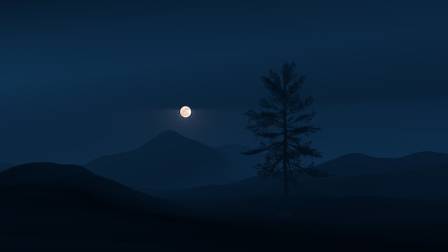
Mastering Nocturnal Scenes: An Analysis of Twelve Famous Night Paintings
The subject of night presents a unique and evocative challenge for painters. It pushes artists to move beyond literal representation to capture mood, atmosphere, and the nuanced interplay of light within darkness. The following collection examines twelve significant artworks that successfully depict the nocturnal world, revealing the artistic techniques that bring these scenes to life.
BLOCK · en
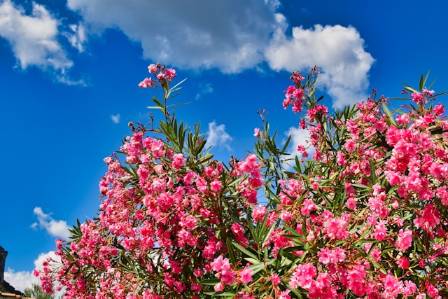
Essential Tips for Growing and Caring for Oleander
Oleander is a highly valued shrub for gardeners living in warmer climates, primarily due to its resilience and ability to produce beautiful flowers for most of the year. Originating from the Mediterranean region, this evergreen plant is frequently used in public landscaping and roadside plantings because it handles heat, drought, and pollution with ease. It features slender, olive-like leaves and clusters of star-shaped flowers that appear in various shades of white, pink, red, and yellow. While it is an excellent addition to a garden, it is important to remember that all parts of this shrub are highly toxic to humans and pets, so it requires careful handling and thoughtful placement.
BLOCK · en

The Luminous Kitchen: 6 Budget-Friendly Secrets to an Airy, Open Space
The trend toward bright, airy kitchens shows no signs of slowing down—and for good reason. As urban living often means adapting to more compact layouts, creating a sense of spaciousness has become essential for comfort. Even in a generously sized kitchen, thoughtful design choices that enhance light and flow can significantly uplift the atmosphere.
BLOCK · en

The Enchanting Cinque Terre: Fiat-Free Italy
I wake before most visitors in one of my favorite villages along the Italian Riviera. In Vernazza, the early sunlight reaches the top of the village bell tower and slowly brings the peaceful streets to life. The morning air is cool, damp and wonderfully fresh as I walk downhill and pass beneath the railway tracks.
BLOCK · en

Delicious caramel pudding
Whenever I think of caramel pudding, memories of my grandmother’s kitchen come rushing back—the soft clinking of her mixing bowls, the aroma of sugar turning golden and filling the cozy farmhouse. This dessert was always a labor of love, a simple yet heartwarming treat in a ramekin. Today, I’m thrilled to share her treasured recipe with you.
BLOCK · en

Huangshan Mountain In The Winter
Huangshan Mountain is widely regarded as one of the most breathtaking destinations in the world for hiking and photography, even during the coldest months of winter.