Plaza story
Top 5 Fountains in Rome
Among all cities around the globe, Rome has an extraordinary relationship with fountains. More than 2,000 fountains are scattered throughout Italy’s capital, offering refreshing sounds of flowing water, cooling relief during hot summers, and unforgettable romantic settings for visitors. This deep connection with fountains dates back thousands of years. By 98 AD, ancient Rome already featured 39 impressive monumental fountains celebrating the power and glory of the empire, along with hundreds of public water basins used for drinking and washing.
Elise Carter
City note
Sunny tip
The full plaza write-up continues below on the positive pulse board.
Board
NYC Good News
Among all cities around the globe, Rome has an extraordinary relationship with fountains. More than 2,000 fountains are scattered throughout Italy’s capital, offering refreshing sounds of flowing water, cooling relief during hot summers, and unforgettable romantic settings for visitors. This deep connection with fountains dates back thousands of years. By 98 AD, ancient Rome already featured 39 impressive monumental fountains celebrating the power and glory of the empire, along with hundreds of public water basins used for drinking and washing.
After the fall of the Roman Empire in the 5th century, many aqueducts that supplied these fountains were abandoned or destroyed, leaving the city without its famous water displays for nearly a thousand years. A later restoration movement brought water back to Rome, and today the city once again rewards visitors with fountains around nearly every corner. These are some of the most remarkable fountains worth discovering.
Trevi Fountain (Fontana di Trevi)
As a teenager visiting Rome on a school trip, I tossed coins into the Trevi Fountain because of the famous tradition claiming that anyone who does so will eventually return to the city. Many years later, that legend came true, and I found myself standing before Rome’s most celebrated fountain again, this time with a deeper appreciation for its history, artistry, and timeless charm.
The Trevi Fountain is also the busiest fountain in Rome. Since the city attracts millions of travelers each year, crowds gather around this masterpiece throughout the day. Reaching the front requires patience and determination, but the experience is worth the effort.
Set against the magnificent Palazzo Poli, the fountain is the largest Baroque fountain in Rome, measuring about 86 feet high and 161 feet wide. Water flows dramatically across marble sculptures and rocky formations, creating a spectacular scene. At the center, the sea god Oceanus rides a shell-shaped chariot pulled by mythical sea creatures. Beside him stand figures representing Abundance and Health, while other sculptures depict powerful sea horses being controlled by mythical beings.
The water eventually gathers in a bright turquoise pool where visitors sit, take photographs, and follow the tradition of throwing coins. Around $3,300 worth of coins are collected from the fountain each day, with the money donated to support services for people in need in Rome. Completed in 1762, the fountain remains almost unchanged except for one small detail—the coins once thrown were Italian lire, while today they are euros.
Fountain of the Four Rivers (Fontana dei Quattro Fiumi)
Located in Piazza Navona, the Fountain of the Four Rivers stands on the site of the ancient Stadium of Domitian, where Romans once gathered to watch athletic contests. Today, the square remains a lively meeting place, and Bernini’s masterpiece serves as its centerpiece.
Created in 1651 for Pope Innocent X, whose family palace overlooks the piazza, the fountain represents four major rivers from four continents where the Catholic Church had influence: the Danube in Europe, the Ganges in Asia, the Nile in Africa, and the Rio de la Plata in the Americas.
Each river god has distinctive details connected to its region. The Ganges figure carries an oar, symbolizing navigation, while looking away from the nearby church as a reference to the limited influence of Christianity in India at that time. The Danube figure touches the pope’s personal symbol because it represents the major river closest to Rome. The Rio de la Plata rests near coins representing the wealth of the Americas, while the Nile figure covers his head because the river’s source had not yet been discovered.
The sculptures are surrounded by plants and animals representing their respective continents, including a lion and palm tree for the Nile, a snake for the Ganges, an armadillo-like creature for the Rio de la Plata, and a horse for the Danube. Above the fountain rises an Egyptian obelisk nearly 115 feet tall, topped with a dove representing both peace and the pope.
The fountain creates a mesmerizing combination of movement and sound, making it a perfect place to relax while enjoying the atmosphere of Piazza Navona.
Fountain of Paul’s Water (Fontana dell’Acqua Paola)
Unlike the famous Trevi Fountain and Fountain of the Four Rivers, the Fountain of Paul’s Water receives far fewer visitors because it is located on Janiculum Hill, away from Rome’s busiest tourist routes. However, its quiet location provides some of the finest views of the city’s domes and church towers.
Built in 1612, the fountain marks the end of the restored Acqua Paola aqueduct, which Pope Paul V Borghese revived to provide clean water for local residents. Designed by Giovanni Fontana, the fountain was constructed using white marble taken from nearby ancient Roman ruins.
The impressive structure features three large central arches and smaller side arches framed by gray and red granite columns. Water flows through these openings into five marble basins before reaching a large semicircular pool. Above the arches are decorative details, including dragons, human faces, and a Latin inscription honoring the pope’s contribution.
After completion, marble barriers were installed around the pool to prevent people from using it to water horses. However, visitors continued to misuse the fountain, and by 1707 authorities had to officially ban people from bathing there.
Neptune Fountain (Fontana del Nettuno)
Although the Fountain of the Four Rivers dominates attention in Piazza Navona, the Neptune Fountain at the northern end of the square is another impressive artistic creation. Located near the Museum of Rome and the Brazilian embassy, it is a beautiful example of Renaissance and later Baroque sculpture.
The fountain basin was originally created in 1574 from marble and local stone and was first used as a practical washing area for clothes and goods. The dramatic sculptures that define the fountain today were added centuries later.
At the center, Neptune battles a giant octopus with his trident, creating a powerful image of movement and strength. Around him, sea horses appear frozen in motion as small figures pull their manes and reins. Dolphins, sea creatures, and mythical figures complete the energetic underwater scene.
Turtles Fountain (Fontana delle Tartarughe)
Hidden in the charming Piazza Mattei, the Turtles Fountain is one of Rome’s most delightful and unusual fountains. Built in 1588 to provide drinking water to local residents, its original design featured a basin on a pedestal where water flowed downward into a larger polygon-shaped pool.
The fountain originally displayed four bronze young men standing beside dolphins. Each figure placed a foot on a dolphin’s head while reaching upward toward another dolphin, creating a lively composition of bronze and marble. However, there were no turtles in the original design.
The fountain soon faced a technical problem because the water pressure was too weak to operate all the spouts effectively. Four upper dolphins were removed to improve the water flow, leaving the figures with empty raised hands. During a restoration in the late 1650s, four bronze turtles were added to fill the empty spaces, creating the fountain’s current appearance.
The contrast between the slow-moving turtles and the energetic dolphins below gave the fountain its unique name and character. Today, replicas of this charming fountain can also be found in places such as Bloomfield Hills in Michigan, Sarasota in Florida, Newport in Rhode Island, and San Francisco.
More from the plaza
BLOCK · en
The Most Beautiful Things to Do in Lake Bled, Slovenia
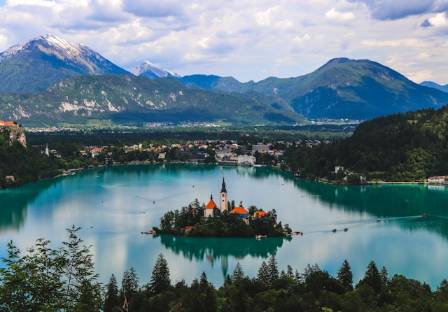
Lake Bled feels like a page from a fairy tale: emerald lake waters framed by the Julian Alps, a cliffside castle, and a tiny island church that seems straight out of a postcard. This guide distills 18 standout experiences into a concise, energized itinerary, so you can plan a trip that blends adventure, scenery, and a touch of medieval magic.
BLOCK · en

How Meal Timing Influences Biological Aging
Factors like age, gender, caloric intake, and dietary quality all play a crucial role in longevity. A piece of clinical research explored the direct relationship between when we consume our food and how quickly our bodies age biologically. The data indicates that delaying your first and final meals of the day is closely linked to accelerated biological aging.
BLOCK · en
15 Types of Birds That Call the Beach Home
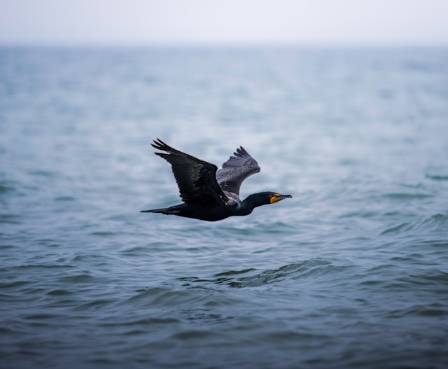
While people head to the shoreline to relax, many bird species migrate to, live by, and depend on coastlines, bays and tidal flats for feeding, resting or nesting. Here are fifteen bird types commonly found along beaches and other coastal habitats.
BLOCK · en

10 Adorable Fluffy Creatures to Brighten Your Day
Ever find yourself craving a warm, fuzzy hug? We've all been there. In times of stress and chaos, there's nothing quite like the comfort of cuddling up with the cutest and fluffiest critters nature has to offer.
BLOCK · en
9 Most Beautiful Forests for Hiking
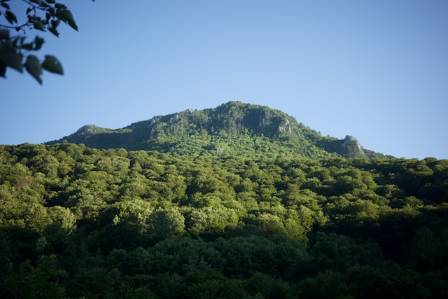
Few experiences compare to walking through a sun-dappled forest, surrounded by rustling leaves and birdsong. From ancient woodlands to mist-shrouded cloud forests, these nine destinations offer some of the world's most magical hiking experiences.
BLOCK · en

Famous Embroidery Styles Globally
Embroidery is more than just crafting intricate patterns and attractive designs. It’s an art form that conveys history and culture simply through its appearance.