Curb Sales of SUVs: Mitigating Health and Environmental Harms

Plaza story

Curb Sales of SUVs: Mitigating Health and Environmental Harms

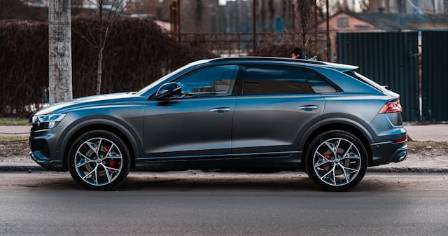
Once a specialized option for offroad driving, Sports Utility Vehicles (SUVs) have evolved into a dominant force in the global automotive market. Their rise has been nothing short of remarkable: globally, SUVs now account for half of all new car sales, a stark jump from just 15% in 2010. The UK market reflects this trend even more acutely, with SUVs making up 63% of new car sales in 2024 compared to a mere 12% over a decade earlier. This proliferation is not an isolated phenomenon but part of a broader "carspreading" trend, where vehicles have steadily grown larger in dimensions—taller, wider, and heavier—over time. As Dr. Anthony Laverty and his colleagues highlight in The BMJ’s climate issue, this expansion brings with it significant, yet often overlooked, risks to public health and the environment, demanding urgent action at local, national, and international levels.

O

Olivia

City note

Sunny tip

The full plaza write-up continues below on the positive pulse board.

Board

NYC Good News


The Global Surge of SUVs: From Niche to Dominance

Once a specialized option for offroad driving, Sports Utility Vehicles (SUVs) have evolved into a dominant force in the global automotive market. Their rise has been nothing short of remarkable: globally, SUVs now account for half of all new car sales, a stark jump from just 15% in 2010. The UK market reflects this trend even more acutely, with SUVs making up 63% of new car sales in 2024 compared to a mere 12% over a decade earlier. This proliferation is not an isolated phenomenon but part of a broader "carspreading" trend, where vehicles have steadily grown larger in dimensions—taller, wider, and heavier—over time. As Dr. Anthony Laverty and his colleagues highlight in The BMJ’s climate issue, this expansion brings with it significant, yet often overlooked, risks to public health and the environment, demanding urgent action at local, national, and international levels.

Health Risks: Disproportionate Dangers to Vulnerable Road Users

The enlarged size of SUVs translates directly to heightened risks for pedestrians, cyclists, and especially children. A recent evidence review cited in the editorial reveals a 44% relative increase in the likelihood of death for adult pedestrians or cyclists hit by an SUV or similarly large car compared to standard-sized vehicles. For children, the risk is even more devastating, with an 82% relative increase in fatalities. Several factors contribute to this disparity: the taller, squarer bonnets of SUVs cause more severe injuries and make collisions inherently more lethal when all other conditions are equal. Additionally, poor visibility for drivers of large SUVs exacerbates risks—for instance, the average driver of a Land Rover Defender cannot see a 4-year-old child standing directly in front of the vehicle. Beyond direct collisions, the growing size of SUVs reduces the safe space available for cyclists and other two-wheelers, hindering efforts to promote active travel and the substantial public health benefits it delivers, such as reduced obesity and improved cardiovascular health.

Environmental Impacts: Undermining Climate and Air Quality Goals

SUVs pose a dual threat to environmental sustainability, undermining both climate action and air quality standards. Compared to regular-sized petrol cars, SUV versions emit significantly more carbon dioxide, a key driver of global warming, due to their increased weight and higher fuel consumption. Their production also demands more raw materials, further straining natural resources. Moreover, SUVs contribute disproportionately to air pollution: as vehicle weight rises, fine particles released from tyre and road wear increase substantially. These tiny particles can penetrate deep into lung tissue and enter the circulatory system, acting as major contributors to chronic illnesses such as asthma, heart disease, and premature death. In this way, the rise of SUVs directly contradicts global efforts to reduce greenhouse gas emissions and improve air quality, two critical pillars of protecting planetary and human health.

Carspreading: The Unstoppable Trend of Vehicle Enlargement

The proliferation of SUVs is symptomatic of "carspreading," a long-term trend where cars have grown steadily larger in dimensions over the past decade. Data from Europe illustrates this clearly: between 2010 and 2024, the average bonnet height of new cars increased from 77 cm to 84 cm, while new vehicles grew 0.5 cm wider each year. This continuous enlargement is driven in part by vehicle manufacturers, who have prioritized larger models despite their associated harms. What makes carspreading particularly concerning is its self-reinforcing nature—larger vehicles demand more road and parking space, leading to increased urban congestion and further discouraging active travel. As cities become designed around larger cars, the cycle of carspreading intensifies, creating a built environment that is less safe, less sustainable, and less conducive to public health.

Policy Solutions: Reversing the Trend Through Targeted Action

To address the harms of SUVs and carspreading, the authors call for a suite of policy measures at multiple levels. Locally, cities can follow the lead of Paris and Cardiff—set to become the first UK city to implement higher parking fees for larger vehicles—to disincentivize SUV ownership. Nationally, reforms to vehicle tax systems are needed to create stronger incentives for smaller, more efficient cars. Additionally, mandating the inclusion of vehicle dimensions on registration certificates would increase public awareness of the growing size of cars, empowering consumers to make more informed choices. At the regulatory level, independent vehicle safety rating programs could introduce a "child visibility test," encouraging manufacturers to design vehicles with lower bonnet heights. Regulators themselves must also take action to curb ever-increasing bonnet heights and vehicle widths, reversing the current trend of unregulated enlargement.

The Role of Health Professionals: Advocating for Change
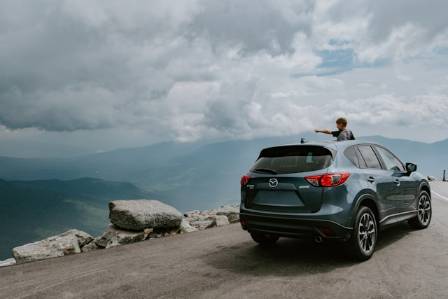
Given their status as trusted opinion leaders in society, health professionals have a critical role to play in driving policy action. The authors urge doctors, nurses, and other health workers to raise their voices about the health impacts of SUVs, linking vehicle size to pedestrian fatalities, air pollution-related illnesses, and the broader climate crisis. By framing the issue as a public health priority, health professionals can influence public discourse and pressure policymakers to implement meaningful reforms. As the editorial emphasizes, addressing the harms of SUVs is not just an environmental issue—it is a matter of protecting the health and well-being of current and future generations. With concerted action at all levels, it is possible to reverse the trend of carspreading and create safer, more sustainable communities.

More from the plaza

BK

BLOCK · en

The Giants That Shape Africa’s Ecosystems

The Giants That Shape Africa’s Ecosystems

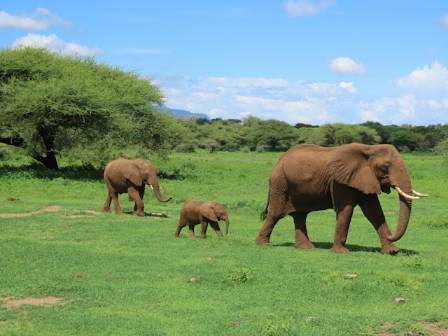
African elephants are the largest animals that live on land. They are generally bigger than their Asian relatives and are easily identified by their enormous ears, whose outline is often compared with the shape of the African continent. Asian elephants, by contrast, have ears that are smaller and more rounded.

BK

BLOCK · en

Coastal Guardians

Coastal Guardians

These elegant palms sketch poetry against the shimmering coastal horizon. As the sun dips low and the sky flushes with coral and gold, coconut palms sway gently above the tideline—silent, windblown poets composing in silhouette. Their fronds arc in rhythm with the surf, drawing invisible verses across the sky.

BK

BLOCK · en

Sea Turtles: Ocean Reptiles

Sea Turtles: Ocean Reptiles

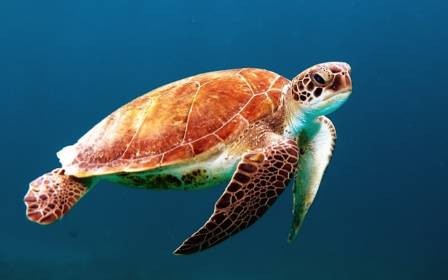
Sea turtles are reptiles uniquely adapted to marine life. Their streamlined bodies, large size, and strong front flippers enable them to dive deeply and swim long distances. The front flippers are elongated and resemble wings, while the back flippers are shorter and more paddle-like. Although they can remain underwater for hours while resting, sea turtles surface periodically every hour or so to breathe.

BK

BLOCK · en

Five Intriguing Insights into Punxsutawney Phil and Groundhog Day

Five Intriguing Insights into Punxsutawney Phil and Groundhog Day

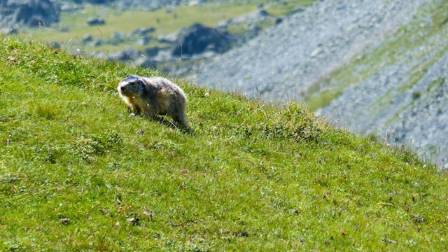
On a recent Groundhog Day, the legendary Punxsutawney Phil observed his shadow, signaling that winter would linger for another six weeks. This quirky American custom, while arguably a peculiar mid-winter ritual, draws crowds at daybreak to a small Pennsylvania town to witness a rodent's climate prediction. While the tradition may seem somewhat taxing for both the early-rising spectators and the hibernating groundhog, it remains a beloved staple of American culture. Here are five fascinating details about the creature at the center of the festivities.

BK

BLOCK · en

The Most Beautiful Things to Do in Lake Bled, Slovenia

The Most Beautiful Things to Do in Lake Bled, Slovenia

Lake Bled feels like a page from a fairy tale: emerald lake waters framed by the Julian Alps, a cliffside castle, and a tiny island church that seems straight out of a postcard. This guide distills 18 standout experiences into a concise, energized itinerary, so you can plan a trip that blends adventure, scenery, and a touch of medieval magic.

BK

BLOCK · en

6 of the World’s Most Impressive Piers

6 of the World’s Most Impressive Piers

Across coastlines worldwide, piers stand as a bridge between land and sea. Some are beloved for their seaside entertainment, others are marvels of history, while a few are celebrated simply for their sheer size. Built from timber, concrete, or steel, these structures have become icons of both engineering and culture. Here are six of the most extraordinary piers on the planet.