Plaza story
The Giants That Shape Africa’s Ecosystems
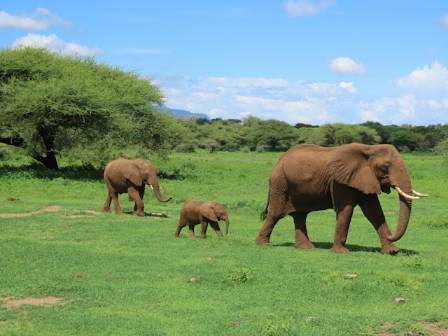
African elephants are the largest animals that live on land. They are generally bigger than their Asian relatives and are easily identified by their enormous ears, whose outline is often compared with the shape of the African continent. Asian elephants, by contrast, have ears that are smaller and more rounded.
Darien Wells
City note
Sunny tip
The full plaza write-up continues below on the positive pulse board.
Board
NYC Good News
African elephants are the largest animals that live on land. They are generally bigger than their Asian relatives and are easily identified by their enormous ears, whose outline is often compared with the shape of the African continent. Asian elephants, by contrast, have ears that are smaller and more rounded.
For a long time, scientists classified all African elephants as one species. More recent research, however, has established that Africa is home to two separate species: the African savanna elephant and the African forest elephant.
Savanna elephants are the larger of the two and are primarily found across the open plains and grasslands of sub-Saharan Africa. Forest elephants are smaller and are adapted to the dense tropical forests of Central and West Africa.
Both species face significant threats to their survival. According to the International Union for Conservation of Nature (IUCN), African savanna elephants are classified as endangered, while African forest elephants are considered critically endangered.
African elephants also play an essential ecological role as keystone species. They are sometimes described as “ecosystem engineers” because their feeding and movement can dramatically alter their surroundings in ways that create opportunities for other animals and plants.
During dry seasons, elephants can use their powerful tusks to excavate dry riverbeds and uncover water, creating drinking places that may be used by numerous other species. Their dung contains seeds that were not fully digested, helping plants disperse and encouraging new growth. In forest environments, elephants open routes through thick vegetation as they travel, while in savanna ecosystems they feed on young trees and shrubs, helping prevent excessive woody growth and preserving open grasslands.
Trunks and Tusks: Tools for Survival
An elephant’s huge ears play an important role in releasing excess heat and helping regulate body temperature. Even so, the intense heat of Africa often requires elephants to use additional cooling strategies.
Water is an essential part of an elephant’s daily life. Elephants draw water into their trunks and spray it over their bodies, effectively creating a natural shower. Once they have finished bathing, they commonly throw dust over their wet skin. This layer can help shield them from intense sunlight and biting insects.
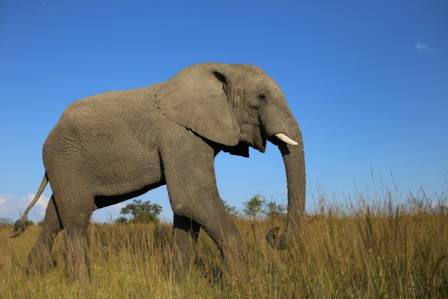
The trunk is an extraordinary structure formed from the nose and upper lip. It serves numerous functions, including breathing, detecting scents, making sounds, drinking, and gathering food.
An elephant’s trunk contains approximately 40,000 muscles, giving it remarkable strength and control. African elephants have two small finger-like projections at the end of the trunk, allowing them to grasp small items and manipulate food with precision. Asian elephants have only one of these extensions.
Both male and female African elephants develop tusks. These are modified teeth that continue growing throughout life. Savanna elephants generally have more noticeably curved tusks, whereas forest elephants tend to have straighter tusks.
Tusks are versatile tools used for digging into the ground for water, obtaining food, stripping bark from trees, and protecting the animal from threats. Male elephants commonly develop larger tusks and may use them when competing with other males.
Diet and Daily Life
African elephants are plant-eating animals with a broad diet that includes grasses, roots, fruit, and tree bark.
Their immense size means they need to consume substantial quantities of vegetation. A fully grown elephant can consume as much as 300 pounds of plant material in a single day.
To obtain enough nourishment, elephants spend a significant portion of their lives moving across extensive areas in search of sufficient food.
African elephants occupy a wide range of environments, from the open savannas of sub-Saharan Africa to the tropical rainforests of Central and West Africa.
The most northerly elephant populations are found in Mali’s Sahel Desert. These elephants have adapted to the severe environment by following circular migration routes that allow them to locate scattered and limited water supplies.
Their enormous appetite can sometimes bring elephants into conflict with people. A single animal can destroy an entire season’s worth of crops during one night. Conservation initiatives therefore often cooperate with farmers to develop protective measures that reduce crop damage and help limit human-elephant conflicts.
Family Groups and Social Behavior
African elephants have complex social structures centered around female-led family groups. Their societies are therefore described as matriarchal.
A herd is typically directed by its oldest and most experienced female, known as the matriarch. She guides a family unit made up primarily of related adult females, called cows, and their young calves.
Male elephants, or bulls, generally leave their family groups after reaching maturity. Once independent, they may live alone or associate with other males in smaller groups.
Elephant reproduction involves an exceptionally long period of maternal investment. Female elephants have the longest gestation of any mammal, carrying a developing calf for almost 22 months.
In most cases, a female produces a single calf every two to four years. Newborn calves are already remarkably large, weighing approximately 200 pounds and standing around three feet tall at birth.
More from the plaza
BLOCK · en

The Legacy of Peking Duck: A Culinary Masterpiece
Peking duck is celebrated globally as a premier gastronomic achievement, serving as a cultural landmark for Beijing much like the ancient hutongs or the Forbidden City. The presentation is an art form; a master chef can expertly carve a single bird into over a hundred delicate slices. Tradition dictates that the experience begins with the crispy skin, often enhanced by a light dusting of sugar, followed by the succulent meat accompanied by a variety of traditional sides.
BLOCK · en

Half a Dozen Intriguing Truths Regarding Waterfowl in the Outer Banks
The Outer Banks serves as one of the premier avian refuges in the United States, providing a sanctuary for a vast array of birds. Whether these creatures reside there throughout the year or merely visit during the colder months, the diverse species of waterfowl found in this region offer endless fascination. From unique physiological adaptations to surprising behavioral traits, here are several compelling facts about the birds that inhabit these coastal shores.
BLOCK · en

Autonomous Mobile Robots
In the era of the fourth industrial revolution, emerging technologies are becoming essential for improving maintenance operations, security systems, and surveillance activities. Industrial safety monitoring, infrastructure inspection, perimeter surveillance, and predictive maintenance have become critical priorities for organizations across all industries.
BLOCK · en

The Eurasian Blue Tit: A Comprehensive Profile
The Eurasian Blue Tit (Cyanistes caeruleus) stands out as one of Europe's most recognizable and beloved garden birds. This vibrant species demonstrates remarkable adaptability to various environments while maintaining fascinating behavioral characteristics that continue to captivate ornithologists and bird enthusiasts alike.
BLOCK · en
10 Remarkable Health Benefits of Apples
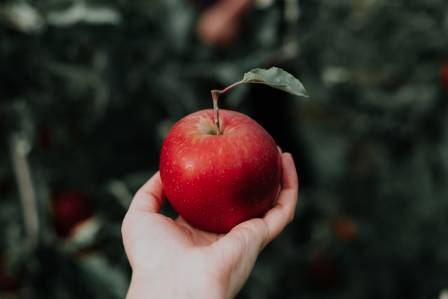
Apples are not only delicious but also packed with a variety of health benefits. Consuming apples regularly may reduce your risk of chronic diseases like cancer, diabetes, and heart disease. They can also aid in weight management while promoting gut and brain health. Apples are the most popular fruit worldwide, available in a range of varieties, from sweet reds like Red Delicious and Fuji to tart greens like Granny Smith. Their versatility extends beyond snacking to being used in pies, salads, smoothies, and more. Here’s a look at the impressive health benefits of apples
BLOCK · en
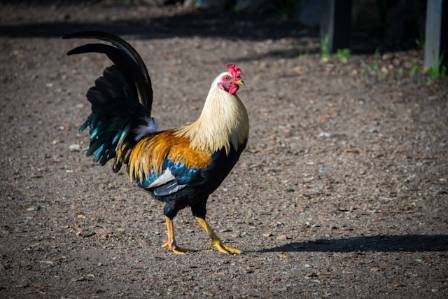
The Real Reason Roosters Make So Much Noise Every Single Morning
The famous morning shout at sunrise echoes across the globe. People often view this sound as a natural alarm clock. However, these birds do not perform their morning routine out of simple duty. They do not just follow an ancient tradition. Various scientific papers reveal a much deeper purpose. Male chickens shout at dawn to show their absolute power. They use their voices to broadcast their social rank to the entire group.