Plaza story
Colored Pencil Landscape
Landscapes can sometimes feel overwhelming—so many leaves, blades of grass, rocks, clouds, and of course, endless shades of green!
Ava Quinn
City note
Sunny tip
The full plaza write-up continues below on the positive pulse board.
Board
NYC Good News
Landscapes can sometimes feel overwhelming—so many leaves, blades of grass, rocks, clouds, and of course, endless shades of green!
This guide breaks a large scene into manageable parts, so you can gradually build a complete landscape from a reference photo using only the pencils in a basic starter set.
Choose a photo you like and practice each element individually—composition, light, trees, grass, clouds, stone, and water. Work through each section, and soon you’ll have the skills to create your own colored pencil landscape.
Planning Your Landscape
Start with small steps. Before adding color, sketch a quick tonal thumbnail to organize shapes and composition.
Don’t worry about drawing every leaf or brick. Decide what belongs in the frame, what can be left out, and where your main focus will sit—often where the brightest light meets the darkest shadow, slightly off-center.
You can sketch outdoors or from a photo. Treat the photo as inspiration, not a strict guide—move or remove objects to improve your composition.
Starting Your First Colored Pencil Landscape
When I first attempted a full landscape, I stared at my reference photo for ages and felt paralyzed—there was just too much to draw!
The key is breaking the scene into smaller elements. This guide walks you through each part one at a time. You don’t need a huge set of pencils; 12–24 basic colors are enough. Any photo with some variety—sky, trees, grass—will work.
Each section below explains one element: what to observe, how to approach it, and why the technique works. This is about understanding your own drawing, not copying someone else’s.
Capturing Light
Light guides the viewer’s eye.
In rural landscapes, sunlight usually comes from one direction, softened by trees or hills. In cityscapes, streetlights, windows, and signs may cast different pools of light.
Observe the light’s direction and color: warm at sunrise or sunset, cooler under midday blue skies. For more about warm vs. cool colors, see our color theory guide before applying it to your landscape.
Drawing Trees
Trees can be intimidating if you try to draw every leaf.
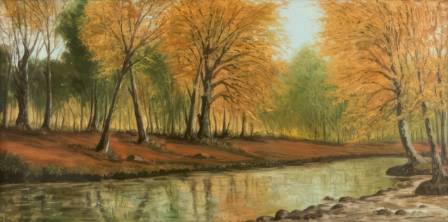
Start with the overall shape—trunk, main branches, and massed foliage—rather than twigs. Layering works best: block in trunk and branches, then add clusters of leaves as soft masses. Use an eraser to create gaps for sky and soften edges.
Consider the season:
Spring: light, olive greens
Summer: rich, deep greens
Autumn: yellows, oranges, browns
Winter: bare branches, possibly snow highlights
Step-by-step workshops are available for hillside forests and single trees using watercolor pencils.
Grass, Weeds, and Wildflowers
Foreground grass can be tricky.
Start with shadows to push lighter blades forward. Vary pencil pressure for subtle color changes. Let grass blades overlap and bend naturally—uniform height or direction looks artificial. Closer blades can cast shadows on those behind them, adding depth.
Season affects color: summer grass often has yellowish or brownish tones, not just flat green. Tutorials like Brokken Bridge or Peter’s Garden Archway demonstrate these techniques.
Skies and Clouds
Skies are more than a flat blue.
The sky is usually darker overhead and lighter near the horizon. Light pressure with your pencil makes it easier to lift out clouds with an eraser, giving them soft edges. Shadows beneath clouds indicate indirect sunlight.
Observe real clouds to capture shape and movement. Different cloud forms near the horizon versus overhead create realism. See our cloud-drawing guide for more techniques.
Stone and Brick
Rocks, walls, and buildings provide structure.
Use scribbles or broken strokes for rough textures while keeping light and shadow in mind. Wet stones appear smoother and shinier, dry stones show more paper texture. Linear perspective helps prevent leaning walls.
Focus on light first, texture second. Tutorials like Dartmoor Bowerman Stone combine rocks, fields, and sky in one scene.
Water
Water reflects its surroundings—never just “blue.”
Calm water mirrors nearby shapes and colors; wind breaks reflections into irregular patterns. Copy the shapes of reflections rather than assuming what water “should” look like. Flipping your reference upside down can help you focus on shapes and colors rather than objects.
Adding water brings life to your landscape. If your scene has a harbor, canal, or lake, consider including boats and make them appear as if floating naturally. Tutorials like River in Dartmoor, England show how to render realistic water.
Final Tips
Work on each element with a favorite reference photo beside you. You may not perfect every part at first—and that’s okay. The goal is to understand how each element functions so you can revisit and refine your landscapes with fresh eyes.
More from the plaza
BLOCK · en

The Real Reason Roosters Make So Much Noise Every Single Morning
The famous morning shout at sunrise echoes across the globe. People often view this sound as a natural alarm clock. However, these birds do not perform their morning routine out of simple duty. They do not just follow an ancient tradition. Various scientific papers reveal a much deeper purpose. Male chickens shout at dawn to show their absolute power. They use their voices to broadcast their social rank to the entire group.
BLOCK · en
6 of the World’s Most Impressive Piers
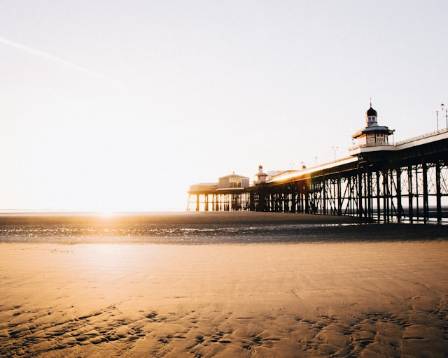
Across coastlines worldwide, piers stand as a bridge between land and sea. Some are beloved for their seaside entertainment, others are marvels of history, while a few are celebrated simply for their sheer size. Built from timber, concrete, or steel, these structures have become icons of both engineering and culture. Here are six of the most extraordinary piers on the planet.
BLOCK · en

How to design your wooden ring box of walnut wood
Crafting a ring box from walnut wood is a beautiful way to combine fine craftsmanship with the timeless beauty of natural materials. Walnut is a popular option for ring boxes because of its rich brown tones, elegant grain patterns, and durable quality.
BLOCK · en
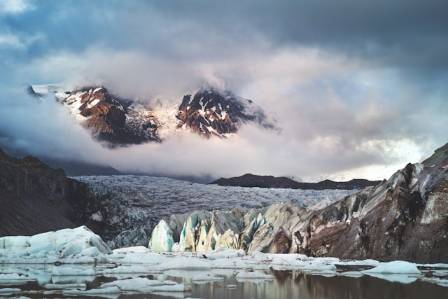
Glacial Landforms and Rock Types
The retreat of ancient glaciers shaped the landscape of the Puget Lowland, leaving behind a wide variety of glacial landforms and deposits. These features provide important evidence of the region’s icy past and reveal how massive sheets of ice transformed the terrain over thousands of years.
BLOCK · en

Silk Secrets: Insider Tips for Styling Luxurious Silk
Master the elegance of silk with expert guidance. Discover how to combine textures, experiment with draping, and care for your silk pieces. Transform your outfits with fashion’s most cherished fabric.
BLOCK · en

How is beach sand created?
Many tropical islands are surrounded by beaches covered in brilliant white sand. Hawaii, however, offers beaches in a remarkable range of colors, including white, black, green, and red. Bermuda is known for its pinkish sand, while sandy brown is the most common color found along beaches around the world. But what causes these differences in color? Why does some sand feel smooth and powdery while other sand feels coarse beneath your feet? And how does beach sand form in the first place?