Plaza story
10 Fascinating Facts About Berlin Cathedral You Probably Didn’t Know
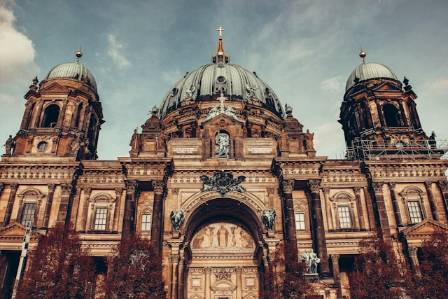
Berlin Cathedral, standing proudly on Museum Island, is one of Germany’s most iconic landmarks. With its massive dome, intricate history, and cultural significance, this church is far more than just an architectural gem. Let’s uncover ten intriguing facts about this remarkable building.
Jimmy
City note
Sunny tip
The full plaza write-up continues below on the positive pulse board.
Board
NYC Good News
Berlin Cathedral, standing proudly on Museum Island, is one of Germany’s most iconic landmarks. With its massive dome, intricate history, and cultural significance, this church is far more than just an architectural gem. Let’s uncover ten intriguing facts about this remarkable building.
Located on Museum Island
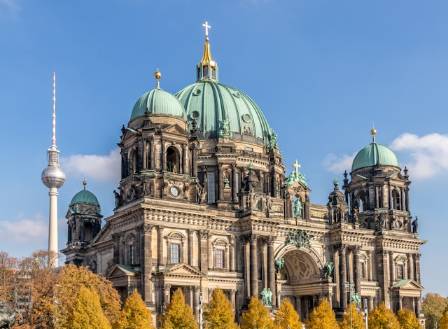
The cathedral, officially called the Supreme Parish and Collegiate Church, sits on Spree Island in central Berlin. This area, famously known as Museum Island, houses world-class institutions like the Pergamonmuseum and the Altes Museum, making the cathedral part of one of Europe’s most important cultural hubs.
Germany’s Largest Protestant Church
Stretching 114 meters long and 74 meters wide, with its dome rising 115 meters high, Berlin Cathedral dominates the city’s skyline. Although shorter than the Fernsehturm TV Tower, it remains the most imposing Protestant church in Germany.
Roots Going Back to the 15th Century
The cathedral’s origins trace to 1454, when Prince-Elector Frederick II built a chapel at Berlin Palace. Dedicated to Saint Erasmus, this modest structure marked the beginning of a religious tradition that would evolve over centuries.
A New Church Emerged in 1538
By the mid-16th century, a larger church replaced the chapel. This Collegiate Church featured two towers and stood adjacent to the palace, reflecting the growing power of the Hohenzollern dynasty.
The Baroque Cathedral of the 18th Century
In the 1740s, the older church was demolished to make way for a grand Baroque-style Calvinist cathedral. Completed by 1750, it bore striking similarities to the current building’s style, setting the stage for what was to come.
Remodeled in the 1820s
Following the unification of Lutheran and Calvinist congregations in 1817, the cathedral underwent a redesign. Architect Karl Friedrich Schinkel transformed its appearance into a Neoclassical structure, symbolizing this new religious alliance.
Rebuilt Under Emperor William II
The Neoclassical version was torn down in 1893 to construct the magnificent structure we see today. Commissioned by Emperor William II, the new design by Julius and Otto Raschdorff combined Baroque and Renaissance elements.
Inaugurated in 1905
After 11 years of construction and a cost of 11.5 million marks, the cathedral was officially opened in 1905. It was often described as the Protestant counterpart to St. Peter’s Basilica in Rome because of its scale and grandeur.
Damaged During World War II
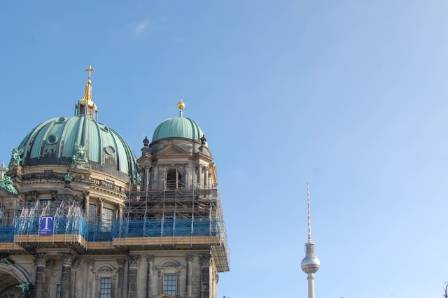
Allied bombings in 1944 severely damaged the dome and other parts of the building. Restoration efforts began in the late 1940s, but in 1975, East German authorities controversially demolished the intact Memorial Church section for political reasons.
A Venue for Culture and Worship Today
Restoration of the cathedral’s interior finished in 2002, and the building now serves multiple roles. From religious ceremonies and concerts to spectacular light shows, Berlin Cathedral continues to inspire both locals and visitors.
Conclusion
Berlin Cathedral is not just a church—it is a monument that mirrors Berlin’s turbulent history and cultural richness. From its medieval chapel origins to its role today as a center for faith, art, and community, this cathedral is an essential stop for anyone exploring Germany’s capital.
More from the plaza
BLOCK · en

Cute, Weird, and Unique Robots
Modern robots have become smarter than ever, capable of responding to their surroundings and completing a variety of tasks independently, without human supervision. As a result, robots are now widely used in industries such as manufacturing. According to the International Federation of Robotics, an estimated 1.7 million new robots were expected to be installed in factories worldwide by 2020.
BLOCK · en

The Importance of a Natural Night Sky: Wonder, Stargazing, and Scientific Discover
In an age when artificial lighting increasingly fills the night, the brilliance of human civilization dims the stars above. Yet, amateur astronomers, conservationists, and researchers alike advocate for protecting the natural darkness that once blanketed Earth. While artificial light is useful, we often undervalue the importance of darkness.
BLOCK · en

All You Need to Know Before Purchasing an SUV
An SUV is an excellent option for anyone seeking a vehicle that offers more room than a sedan and more enjoyment than a minivan. Let’s take a moment to go over what you should keep in mind when purchasing an SUV.
BLOCK · en

Rock Climbing Mastery: Essential Techniques for Better Performance
Improving your climbing technique requires more than just strength - it's about movement efficiency, body positioning, and mental focus. These practical tips will help climbers of all levels refine their skills and tackle more challenging routes with confidence.
BLOCK · en

The 2-Inch Rule: Why Your Nightstand Shouldn’t Touch Your Bed
The Verdict: For optimal bedroom design, your nightstand should never sit flush against your bed. Maintaining a small gap of 2 to 4 inches is the key to a space that feels organized, functional, and visually spacious. Let’s explore why this small distance makes a significant difference in both the aesthetics and practicality of your bedroom.
BLOCK · en

Digital Earth: Redefining Geospatial Data
Digital Earth represents an ambitious idea centered on building a detailed virtual version of our planet. By combining extensive geospatial data, it enables a more comprehensive understanding of Earth’s natural systems as well as human activities.