Plaza story
Five Intriguing Truths Regarding Satellites and Their Orbital Paths
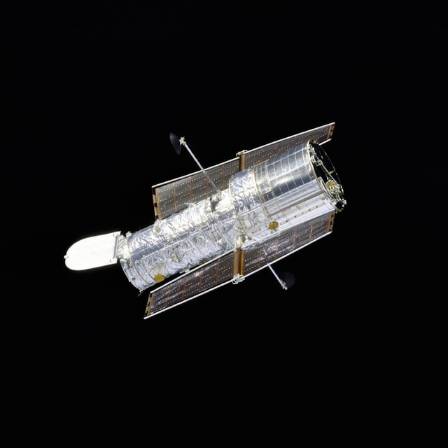
While many view satellites as simple pieces of machinery, their history and operation are filled with fascinating complexities, ranging from early physics theories to "zombie" transmissions. To better understand these technical marvels and the space they occupy, we have compiled several key insights that highlight the unique nature of orbital science.
Christopher Daniel Whitfield
City note
Sunny tip
The full plaza write-up continues below on the positive pulse board.
Board
NYC Good News
While many view satellites as simple pieces of machinery, their history and operation are filled with fascinating complexities, ranging from early physics theories to "zombie" transmissions. To better understand these technical marvels and the space they occupy, we have compiled several key insights that highlight the unique nature of orbital science.
Isaac Newton Mathematically Validated Orbits Long Before Space Travel
In 1687, Isaac Newton established the fundamental principles of motion, suggesting that an object will continue its path unless interrupted by an external force. This concept is the heart of satellite operation, representing a delicate equilibrium between the object's forward momentum and the pull of Earth's gravity. Newton illustrated this using a thought experiment involving a mountain-top cannon. He reasoned that while a weak blast would result in the ball hitting the ground and an overpowered one would send it into deep space, a perfectly calibrated launch would allow the projectile to fall indefinitely around the curve of the Earth, effectively entering orbit.
Satellite Missions Utilize Three Primary Orbital Categories
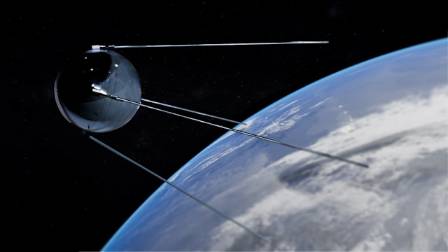
Operational altitudes for these machines vary significantly, stretching from approximately 300 miles to precisely 22,236 miles above the planet. Low-Earth Orbit (LEO) is the closest tier, situated between 300 and 900 miles up. Satellites here are typically smaller and simpler to deploy, often launching in large groups on a single vehicle. Moving higher, Medium-Earth Orbit (MEO) occupies the space between 3,100 and 7,500 miles. At this height, a relatively small cluster of around ten satellites can provide nearly global coverage. Finally, Geostationary Orbit (GEO) sits at a specific altitude of 22,236 miles directly over the equator. Because GEO satellites travel at the same rotational speed as Earth, they seem to stay fixed in one spot in the sky, allowing constant communication with simple, stationary ground antennas.
High-Altitude Satellites Must Occupy Regulated Orbital Slots
Due to the specific requirements of Geostationary Orbit, usable space is finite. Every GEO satellite must be positioned in a designated "slot" to prevent interference and collisions with other hardware. These positions are assigned by national space departments and strictly overseen by the International Telecommunications Union. This rigorous regulatory process, which often spans several years, ensures that the limited equatorial path remains organized and functional for all global operators.
Periodic Adjustments Are Required to Maintain Proper Positioning
Satellites do not stay perfectly still; they tend to "wobble" or drift due to various gravitational influences. This movement can pull a geostationary satellite into a figure-eight pattern, eventually breaking its link with ground-based receivers. To counteract this, operators perform "station keeping," using small onboard engines called thrusters to nudge the craft back into its assigned coordinate. This constant maintenance relies on a steady exchange of data between the spacecraft and mission control centers on the ground.
Decommissioned Satellites Face Different Ends Based on Their Altitude
The operational life of a satellite can span from a few years to several decades, and the method of disposal depends on its location. Hardware in lower altitudes generally succumbs to atmospheric drag and gravity, eventually re-entering the atmosphere and incinerating. Conversely, GEO satellites are moved using their final reserves of fuel into a "graveyard orbit" several hundred kilometers above the active zone. In this isolated region, they remain indefinitely without interfering with active missions. Occasionally, these retired crafts exhibit "zombie" behavior, unexpectedly resuming transmissions decades after they were shut down, a phenomenon that continues to fascinate both professional and amateur astronomers.
More from the plaza
BLOCK · en

Technology and Workplace Safety
Technological advancements are changing every aspect of work, including how we maintain safety on the job. Tools such as AI-powered risk detection, wearable monitors, and real-time sensors are redefining safety standards.
BLOCK · en

Unlocking Vitamin C Richness: Beyond Citrus, 10 Unexpected Sources
Contrary to common belief, vitamin C isn't solely confined to citrus fruits. Here's a revelation: there are alternative fruits and vegetables boasting high vitamin C content, ensuring a robust immune system and overall well-being. Elevate Your Immune Health with These Surprisingly Vitamin C-Packed Foods
BLOCK · en

Watercolour florals for beginners
Painting watercolor flowers is a perfect match for a modern, loose painting style. It encourages freedom in brushwork and lets you fully take advantage of watercolor’s natural ability to blend and flow. For many beginners, florals are often the first subject they’re excited to try—and they rem
BLOCK · en

A Guide to Color Mixing With Natural Pigments
Welcome to my newest blog post, where we’ll dive into the captivating world of primary color mixing, with a special focus on the enchanting earth pigments—red, yellow, and blue ochres. For many watercolor artists, experimenting with these pigments can be both challenging and deeply rewarding.
BLOCK · en

The Surprising Story of Prussian Blue and Why It Disappeared From Modern Acrylic Paint
Prussian Blue, known scientifically as pigment PB27, is a deep and intense shade that left a massive mark on art history. This particular color defined the melancholy mood of Picasso during his famous Blue Period and served as a staple for painters throughout the Baroque and Rococo eras. It is also the very pigment generated during the cyanotype printing process, which gave rise to the everyday term blueprint. Despite its widespread historical importance across multiple artistic mediums, modern artists who prefer working with acrylics will find it incredibly difficult to locate a tube of genuine Prussian Blue on store shelves today.
BLOCK · en

3 Most Significant Meanings of Horsepower
Horsepower surpasses mere numerical value. It embodies a vehicle's power and performance, serving as a crucial metric in understanding its on-road behavior. The correlation is clear: more horsepower equates to swifter acceleration, while less horsepower contributes to enhanced fuel efficiency. Acquiring knowledge about horsepower empowers individuals to grasp the driving dynamics and overall feel of a car. A comprehensive understanding of horsepower equips individuals to make choices that promise exhilaration day after day on the road.